
Key Takeaways
-
Notion is not a data room. It is a flexible workspace tool that founders adapt for investor-facing tasks, but it has no investor view tracking, no audit log, no dynamic watermarking, and no way to see whether an investor has opened a single document.
-
Visible is purpose-built for the founder-to-investor workflow, connecting a data room, investor pipeline, and update tool on a single platform that shares investor records across all three functions.
-
Engagement data changes how you run a raise. Knowing which investors reviewed your financials, how long they spent, and whether they came back is the difference between following up with conviction and following up on guesswork. Notion cannot surface this. Visible does, on the free plan.
-
The practical split used by many founders is Notion for internal prep and organization, and Visible for everything that touches investors directly. The two tools are not in competition for the same job.
-
Visible's Starter plan is free, which removes the budget argument for defaulting to Notion as a fundraising workaround. The core workflow, including a data room, investor updates with open tracking, and a native pipeline, is operational before you spend a dollar.
Notion is an excellent general workspace, but it lacks the investor tracking, dynamic watermarking, and audit logs required for a secure data room. Visible is a purpose-built fundraising platform offering a data room, CRM, and investor updates in one connected suite, starting for free.
The question isn't whether Notion is good. It's whether it's the right tool for a specific, high-stakes category of work: managing investor relationships during a fundraise.
This is an honest comparison. We'll cover what Notion genuinely does well, because it does do some things well, and exactly where it hits a ceiling when fundraising gets serious. If you're a founder evaluating whether your current Notion setup is fundraise-ready, this article is for you. If you're a VC or Platform Director whose portfolio companies are defaulting to Notion for investor reporting, there's a section for you too.
Notion is a great tool for organizing and preparing fundraising content. It was not built to control how that content moves once it leaves your workspace, and that distinction matters more than most founders realize until they're mid-raise.
Feature Comparison: Visible vs. Notion
The table below covers the features that matter most during an active fundraise. Where Notion requires a workaround or third-party tool to approximate a feature, that is noted.
| Feature | Visible | Notion |
|---|---|---|
| INVESTOR UPDATES | ||
| Dedicated update builder | ✅ Yes | ❌ No (manual formatting required) |
| Update open-rate tracking | ✅ Yes, per investor | ❌ Not available |
| Update templates | ✅ Yes, investor-specific | ❌ Generic page templates only |
| Send to segmented investor lists | ✅ Yes | ❌ Manual, no native segmentation |
| Live metric embeds from data integrations | ✅ Yes (QuickBooks, Xero, Mixpanel, GA, and others) | ⚠️ Limited (requires third-party embeds) |
| DATA ROOM | ||
| Purpose-built data room | ✅ Yes | ❌ No (adapted workaround) |
| Per-investor access controls | ✅ Yes, folder and file level | ⚠️ Basic guest permissions only |
| Investor view tracking | ✅ Yes, per file, per session | ❌ Not available natively |
| Audit log | ✅ Yes | ❌ Not available |
| Dynamic watermarking | ✅ Yes (Growth plan) | ❌ Not available |
| Remote access revocation | ✅ Yes, including downloaded files | ❌ Not available |
| Investor account required to view | ✅ No | ❌ Yes (guests need a Notion account) |
| SOC 2 Type II certified | ✅ Yes | ✅ Yes |
| Free data room included | ✅ Yes (Starter: 1 room, 25-file limit) | ❌ No dedicated data room product |
| INVESTOR PIPELINE | ||
| Native CRM | ✅ Yes | ❌ No (requires manual database build) |
| Pipeline connected to data room activity | ✅ Yes | ❌ No |
| Pipeline connected to update engagement | ✅ Yes | ❌ No |
| BCC email logging | ✅ Yes | ❌ Not available |
| Custom pipeline properties | ✅ Yes | ⚠️ Yes (manual setup required) |
| INVESTOR DATABASE | ||
| Searchable investor database | ✅ Yes, via Visible Connect (included) | ❌ Not available |
| Add investors directly to pipeline | ✅ Yes, one click | ❌ Not available |
| PRICING | ||
| Free plan | ✅ Yes, Starter (no credit card required) | ✅ Yes (personal/team use) |
| Entry-level paid plan | ✅ $59/month billed annually (Base) | ✅ $10/user/month billed annually (Plus) |
| Pricing model | ✅ Per company | ⚠️ Per seat |
| Built for fundraising | ✅ Yes | ❌ No |
What Notion Does Well
There's a reason so many founders reach for Notion when a data room conversation comes up. It's not the right tool for the job, but the impulse makes sense.
Familiarity and Zero Switching Cost
Notion is already open. For a founder running their company in the product, adding a new page for investor documents requires no new login, no new contract, and no learning curve. When you're building a company and preparing for a raise simultaneously, convenience has real weight.
That's mostly what's driving the decision to use Notion. Not because Notion is purpose-built for fundraising, but because it's already there.
The Template Ecosystem
Notion's marketplace has dozens of data room and fundraising templates. They provide a reasonable starting framework for organizing documents, and for a first-time founder who has never run a raise before, they remove some of the guesswork around structure.
Worth noting: the existence of these templates reflects founder demand for a solution Notion doesn't natively provide. The templates are workarounds built on top of a general-purpose tool.
Internal Drafting and Organization
Where Notion holds up best in a fundraising context is internal prep: drafting your investor narrative, storing documents before they're ready to share, keeping running notes from investor conversations. As a private scratchpad for organizing your thinking, it's fine.
The problem starts the moment that content leaves your workspace and goes to an investor. That transition is where the tool's limitations become consequential, and where founders typically discover them too late.
Where Notion Breaks Down During a Fundraise
This is the section most founders wish they had read before their first serious investor conversation. The limitations below are not edge cases. They are the predictable, structural gaps that emerge when a general-purpose workspace tool gets asked to do a job it was not designed for.
No Investor View Tracking
When you share a Notion page with an investor, you get one piece of information: whether they have the link. That's it. You don't know if they opened it. You don't know which documents they spent time on. You don't know if they came back for a second look, forwarded it to a partner, or never clicked through at all.
This is not a minor inconvenience. Investor engagement data is how you run a fundraise intelligently. Knowing which investors are actively reviewing your materials tells you who to follow up with, when to follow up, and how to prioritize your time across a pipeline that may have dozens of active conversations. Without it, you're following up on gut feel and guesswork.
Notion's API records only last-edited timestamps. There is no native per-viewer analytics, no document-level tracking, and no way to see individual investor behavior without bolting on a third-party tool. That workaround adds complexity and still does not give you the per-investor, per-file visibility that a purpose-built data room provides.
Access Controls That Were Not Built for Diligence
Notion's sharing settings were designed for team collaboration, not for controlled document distribution to external parties during a high-stakes financial process.
Sharing a Notion page publicly means anyone with the link can access it, with no record of who that includes. Sharing via guest invite requires the investor to have their own Notion account, adding friction on their end before they've seen a single document. Granular permissions at the folder or file level require manual configuration that is easy to misconfigure and harder to audit.
There is no dynamic watermarking. There is no remote access revocation for documents that have already been downloaded. There is no audit log showing you precisely who accessed what and when. For a pre-seed deck, these gaps may feel theoretical. By the time you're sharing a cap table, financial model, or legal documents with multiple investors simultaneously, they are not.
A Pipeline That Lives in a Spreadsheet
Notion databases can be configured to track investor outreach. Founders do this. It requires building the structure from scratch, maintaining it manually, and accepting that it will drift the moment the pace of the raise picks up and updating the database falls behind real conversations.
More importantly, a Notion pipeline is disconnected from everything else. When an investor opens your data room, that activity does not appear in your pipeline. When you send an investor update, you cannot see who read it filtered by pipeline stage. The relationship context and the engagement data live in separate places, because they are in separate tools.
That disconnection has a cost. The insight that matters in a fundraise is not just "I emailed this investor" or "they have the data room link." It's "this investor opened the data room twice this week and spent twelve minutes on the financials." A Notion pipeline cannot surface that. A connected platform can.
The Professionalism Gap
This one is harder to quantify but consistently comes up in founder feedback. A Notion page, however well organized, reads like a Notion page. For investors who review dozens of data rooms, the difference between a shared Notion link and a purpose-built data room with a clean URL, structured folder hierarchy, and professional presentation is noticeable.
First impressions in a fundraise carry more weight than founders typically account for. The data room is often the first detailed look an investor takes at your company. What it signals about how you run your operations matters.
What Visible Is Built to Do
Visible was built specifically for the founder-to-investor relationship. Not as a workspace tool adapted for fundraising, but as a platform designed around the specific workflow of running a raise and maintaining investor relationships after one closes.
The data room, investor pipeline, and investor update tool are all in the same platform, sharing the same investor records. That connectedness is the core product decision that separates Visible from any general-purpose tool used as a fundraising workaround.
Investor Updates With Open-Rate Tracking
Visible's investor update tool was the original product, built before the data room and pipeline were added. You write directly in the update builder, choose from templates structured around what investors actually want to see, embed live metrics from connected data sources, and send to your full investor list in a single action.
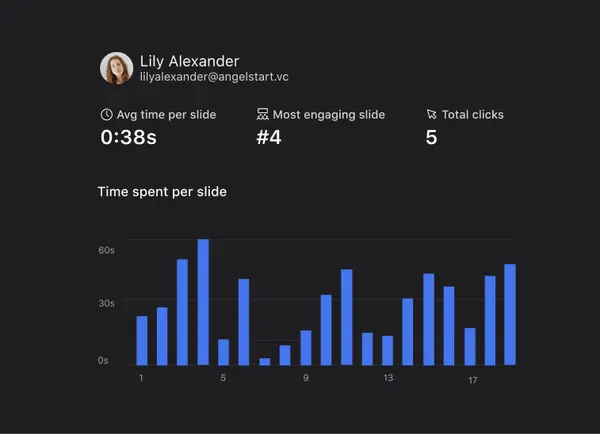
Every update comes with open tracking. You can see which investors read the update, when they opened it, and how long they spent with it. That data lives alongside each investor's record in your pipeline, giving you a complete picture of engagement across the relationship, not just a single touchpoint.
The Starter plan supports updates to 100 investors at no cost. Base at $59/month billed annually supports 250 from your own domain. Core at $129/month supports 500, and Growth at $199/month supports 1,000.
Related resource: How To Write the Perfect Investor Update (Tips and Templates)
A Data Room Built for Diligence
Visible's data room is built for the specific moment when an investor is evaluating whether to write a check. You organize documents into investor-ready folders, set access controls per investor or per folder, and share a clean link that works on any device without requiring the investor to create an account.
Every time an investor opens a document, you see it: which files they viewed, how long they spent, and whether they came back. That engagement data is tied directly to their record in your investor pipeline, so the diligence activity and the relationship context are in the same place.
The free Starter plan includes one data room with a 25-file limit, enough to run a real raise before committing to a paid plan. Base includes one data room with unlimited files. Core at $129/month includes three data rooms with advanced per-file analytics. Growth at $199/month includes unlimited data rooms with dynamic watermarking.
Visible is also SOC 2 Type II certified, with document-level permissions, investor view tracking, and the ability to revoke access remotely, including to documents that have already been downloaded.
Related resource: Startup Data Room: What It Is, What to Include, and How to Build One
A Native Investor Pipeline
Visible's investor pipeline is not a database you configure and maintain manually. Every investor in your pipeline has a contact record with stage, conversation notes, tags, and activity history. When they open your data room, that view appears in their record. When a conversation goes quiet, you can see exactly how long it has been and what the last touchpoint was.
The whole raise, who you are talking to, what they have seen, and where each conversation stands, is in one place. Unlimited pipelines with custom properties and BCC email logging are included from the Base plan. The free Starter plan includes two pipelines, sufficient to run an active raise before committing to a paid plan.
An Investor Database Included in Your Account
Visible Connect is a searchable investor database included in every Visible account. You can search for VCs by stage, sector, check size, and geography, and add them directly to your fundraising pipeline in one click. The investor discovery workflow lives inside the same platform used to run the raise, so you are not managing research in one tool and outreach in another.
Pricing: What You Are Actually Paying For
Both tools have a free tier, and both have paid plans that start under $15/month on paper. But the comparison requires some unpacking, because the pricing models are structured differently and the value delivered at each tier is not equivalent.
Visible Pricing
| Plan | Price | What's Included |
|---|---|---|
| Starter | Free, no credit card required | Investor updates (100 recipients), 1 data room (25-file limit), 2 pipelines, 2 pitch decks |
| Base | $59/month billed annually | 250 update recipients, custom domain, unlimited pipelines and decks, 1 data room (unlimited files) |
| Core | $129/month billed annually | 500 recipients, 3 data rooms, advanced analytics, advanced permissions |
| Growth | $199/month billed annually | 1,000 recipients, unlimited data rooms, dynamic watermarking, dedicated customer success |
Visible's pricing is per company, not per seat. Whether one person or five people at your startup need access during a raise, the price is the same.
The free Starter plan is genuinely functional for an active raise. One data room, two pipelines, and updates to 100 investors covers the workflow for most early-stage founders before they've closed a seed round. It is designed to let you run a real process before you commit to anything.
Notion Pricing
| Plan | Price | What's Included |
|---|---|---|
| Free | Free | Up to 10 guests, basic collaboration, core workspace features, 5MB file upload limit |
| Plus | $10/user/month billed annually | Unlimited guests, unlimited file uploads, 30-day version history |
| Business | $15/user/month billed annually | Advanced permissions, 90-day version history, Notion AI features |
| Enterprise | Custom pricing | Unlimited history, SCIM provisioning, advanced compliance |
Notion's pricing is per seat, which means it scales with your team size. For a solo founder or a two-person team, the Plus plan at $10/user/month is a low number. But that price buys you a general-purpose workspace tool. None of Notion's paid tiers include investor view tracking, a purpose-built data room, or a connected fundraising pipeline, because those features are not available in the product at any price point.
The Real Comparison
At Notion's Plus tier, you get better file storage and unlimited guests. You still do not have investor view tracking, an audit log, a connected pipeline, or a purpose-built data room. Adding third-party tools to fill those gaps, which founders routinely do, increases both cost and complexity.
At Visible's free Starter tier, before spending a dollar, you have a functional data room with access controls, an investor update tool with open tracking, and a native pipeline. The core fundraising workflow is operational on day one.
For most early-stage founders, the relevant question is not which tool is cheaper. It is which tool gives you the information you need to run a raise intelligently? Those are not the same question, and they do not have the same answer.
Related resource: Best Data Room for Startups
When Does it Make Sense to Use Notion for Investor Relations?
You Are at the Very Earliest Stage of Exploration
If you are having initial conversations with angels or advisors before you are formally running a raise, the bar for tooling is low. Sharing a clean Notion page with a deck and a brief company overview is fine for an informal intro. You are not yet managing a pipeline, tracking diligence, or sending structured updates. The overhead of a dedicated platform is not yet justified.
The moment those conversations become a real process with multiple investors in parallel, that calculus changes.
You Are Using Notion as an Internal Prep Layer
As covered earlier, Notion is genuinely useful for organizing fundraising content before it goes external. Drafting your narrative, building your document checklist, storing early versions of your financial model, and collaborating with your co-founder on investor messaging. Used this way, as a private workspace rather than an investor-facing tool, Notion plays to its strengths.
Many founders use both: Notion for internal prep and organization, Visible for everything that touches investors directly. That is a reasonable workflow.
You Have No Budget Whatsoever and Volume Is Very Low
If you are at the absolute earliest stage, raising a small friends-and-family round from two or three people you already know well, and you genuinely cannot absorb any additional tooling cost, Notion is better than nothing. A structured Notion page is better than a disorganized email chain.
But Visible's Starter plan is free. The budget constraint that might push a founder toward Notion as a data room workaround is the same constraint Visible's free tier was designed to remove. It is worth trying before concluding that Notion is the only option.
Who Should Use Visible?
Founders Running an Active Raise
If you are managing multiple investor conversations in parallel and sharing materials with people you want to impress, Visible is the right tool. The data room provides a professional, access-controlled environment for due diligence documents. The pipeline keeps every conversation organized without manual upkeep. The update tool lets you communicate with existing backers while the raise is live.
The combination matters. When an investor opens your data room three times in a week, you want to know. When a conversation has gone quiet for two weeks, you want to see it. When you send an update to your current investors, you want to know who read it. None of that information is available from a Notion setup.
All of it is available from Visible, on the free Starter plan, before you spend anything.
Founders Who Have Already Closed a Round
The investor relationship does not end at close. Seed investors and institutional backers expect structured updates on a consistent cadence. How you communicate post-close shapes how those investors show up when you need introductions, follow-on checks, or references during the next raise.
Visible was built for this relationship as much as for the raise itself. The investor update tool, pipeline history, and data room persist after the round closes. Your investors have a record of everything they've seen and every update they've received. You have a record of who is engaged and who has gone dark. That ongoing visibility is what turns a closed round into a functioning investor network.
Related resource: Investor Reporting for Startups: A Practical Guide to Building Trust and Raising Capital
Chiefs of Staff and Finance Leads Managing Investor Relations
At companies with a dedicated person managing investor relations, Visible removes the operational overhead that comes with a DIY setup. Standardized update templates, a clean data room structure, and a pipeline that tracks itself based on actual investor activity means less time maintaining spreadsheets and more time on the relationship work that actually moves things forward.
VCs Recommending Tools to Portfolio Companies
If you are a Platform Director or GP whose portfolio companies are sending investor updates and sharing diligence materials in inconsistent formats across a dozen different tools, Visible solves a standardization problem you probably feel acutely.
Portfolio companies that use Visible send updates on a consistent cadence, share data rooms with proper access controls, and maintain a pipeline that reflects real activity. For the VC receiving those updates, it means less chasing, less inconsistency, and a cleaner picture of how each company is performing. Recommending Visible to portfolio founders is as much about improving your own visibility into the portfolio as it is about helping them run a better raise.
Related resource: Investor Updates FAQ
A Note for VCs: What to Recommend to Portfolio Companies
If you are a GP, Platform Director, or Associate reading this, you are probably here because a portfolio founder sent you a Notion link and something about the experience prompted you to look for a better answer. This section is for you directly.
The Standardization Problem
A typical seed-stage portfolio has ten to twenty active companies. Each one is at a different stage, running a different process, and using whatever tools felt most convenient when they started their raise. Some send investor updates via Gmail. Some share data rooms via Google Drive. Some use Notion. A few use dedicated platforms.
The result on your end is a fragmented, inconsistent picture of how your portfolio is performing. Updates arrive in different formats at unpredictable intervals. Diligence requests involve hunting down documents across multiple links. There is no consistent signal for which companies are running a disciplined investor relations process and which are not.
Standardization is not just an operational nicety. It is a signal. Founders who run a structured, consistent investor relations process tend to run a structured, consistent company. The correlation is not perfect, but it is real enough to be worth paying attention to.
What to Recommend and Why
Recommending Visible to portfolio companies costs you nothing and takes one conversation. The Starter plan is free, so the ask requires no budget approval from the founder. Setup is fast enough that a founder can have a functional data room and update workflow running within a few hours.
For your end of the relationship, the benefits are concrete. Updates arrive in a consistent format with structured sections for metrics, narrative, and asks. Data room requests are handled through a single platform rather than a rotating set of links. You can see, at a glance, which companies are communicating consistently and which have gone quiet.
For the founder, the benefits are those covered throughout this article: investor-view tracking, a connected pipeline, a professional data room, and a tool built specifically for the job they are trying to do.
The Portfolio Company Reporting Problem at Scale
Platform Directors at larger funds often manage reporting across portfolios of 50 or more companies. At that scale, the inconsistency problem compounds. Quarterly LP reporting requires aggregating updates from dozens of companies across different formats and timelines. The operational overhead is significant and largely invisible to the founders.
Visible's investor update structure, with consistent sections, embedded metrics, and tracked send cadence, makes aggregation meaningfully easier. When portfolio companies are on the same platform, the signal-to-noise ratio on your end improves considerably.
Related resource: LP Reporting Templates for VCs
A Practical Recommendation
The simplest version of this recommendation: point portfolio founders to Visible's free Starter plan at the beginning of a raise, before they default to Notion or a Google Drive folder. Frame it as a standard part of your portfolio support, just as you might recommend a law firm or a cap table tool. The cost to the founder is zero. The upside for both the founder and you is a fundraising process that runs on real information rather than guesswork.
Frequently Asked Questions
Can I use Notion as a data room for fundraising?
Yes, but it compromises your security. Notion allows you to "Publish to Web," meaning anyone with the link can view your page without an account. However, this creates a public URL with no access controls, a dangerous way to share sensitive financial or legal documents. If you want secure, permission-based access in Notion, the investor must create an account, adding friction at a critical moment. Purpose-built data rooms solve this by offering secure, trackable links that don't require an investor login.
What is the difference between Visible and Notion for investor relations?
Visible is purpose-built for founder-to-investor communication. Notion is a general-purpose workspace tool that founders adapt for investor-related tasks. The core difference is that Visible surfaces investor engagement data; Notion does not.
- Visible shows you which investors opened your data room, which files they viewed, and how long they spent. Notion cannot provide any of this information natively.
- Visible connects your data room, investor pipeline, and update tool in one platform. With Notion, each of these functions requires a separate setup with no shared data between them.
- Visible's free Starter plan includes a functional data room, investor update tool, and pipeline. Notion's free plan includes none of these as purpose-built features.
Does Visible replace Notion for startup teams?
No, and it is not designed to. Visible replaces the fundraising-specific workarounds founders build inside Notion, not Notion itself. Most founders who use Visible continue using Notion for internal operations, product planning, and team documentation.
- The practical split used by many founders: Notion for internal prep and organization, Visible for everything that touches investors directly.
- Visible does not offer wikis, project management, or general team documentation. Notion does all of these well.
- If you are evaluating whether to build your investor relations workflow inside Notion or move it to a dedicated tool, that decision belongs in Visible's column. Everything else can stay in Notion.
What do investors actually prefer: a Notion page or a dedicated data room?
Investors who review multiple data rooms regularly notice the difference between a Notion page and a purpose-built data room. A dedicated platform signals that a founder runs a structured process, which carries weight during diligence.
- A clean data room URL, structured folder hierarchy, and professional presentation are table stakes by the time you are in a serious Series A or even a competitive seed process.
- Investors cannot tell you how long they spent on your financials through a Notion page. A purpose-built data room gives founders that visibility, which changes how they follow up.
- The practical signal: if a founder cannot tell you which investors have reviewed their data room materials, they are probably using a tool that was not built for the job.
Is Visible free for founders?
Yes. Visible's Starter plan is permanently free. It includes one data room, two fundraising pipelines, investor updates to 100 recipients, and two pitch decks, enough to run an active early-stage raise before committing to a paid plan.
- The free Starter plan is not a time-limited trial. It is a permanent tier designed to let founders run a real fundraising process before evaluating whether a paid plan makes sense.
- Paid plans start at $59/month billed annually and scale based on the number of update recipients, data rooms, and advanced analytics features needed.
- Visible's pricing is per company, not per seat. The cost stays flat regardless of how many team members need access during a raise.
Can Notion track whether investors opened my investor update?
No. Notion has no email send functionality and no native open-rate tracking for shared pages. If you are writing investor updates in Notion and sending them via Gmail, you have no visibility into who read them.
- Visible's investor update tool tracks opens per investor, showing you who read the update, when they opened it, and how long they engaged with it.
- That engagement data is tied to each investor's record in your pipeline, so you can see update activity alongside data room activity and conversation history in one place.
- For founders sending monthly or quarterly updates to a growing list of investors and advisors, the difference between tracked and untracked communication is the difference between running investor relations proactively and reacting in the dark.