











Key Takeaways
-
Venture capital investors rely on VC tools to manage deal flow, track portfolio performance, and make faster, more informed decisions as funds scale and complexity increases. The right venture capital software creates a shared source of truth across the firm.
-
A modern VC tech stack supports every stage of the investment lifecycle, from sourcing new opportunities to long-term portfolio monitoring. Understanding how different venture capital tools work together helps investors avoid fragmented data and manual processes.
-
Purpose-built VC sourcing tools and portfolio management software turn operational data into strategic insight, helping investors identify patterns, allocate time more effectively, and support founders with greater clarity.
-
Emerging managers can start with VC tools free to test workflows and define priorities before investing in more robust systems. Knowing when to upgrade is critical for building a venture capital software setup that scales with the firm.
-
Investors evaluating the best VC tools focus less on rankings and more on fit, usability, and data quality. A thoughtful approach to selecting venture capital software leads to better decisions today and fewer rebuilds as the firm grows.
Venture capital is no longer run on gut instinct and scattered spreadsheets. As funds compete for deals and manage growing portfolios, software has become a core part of how investors operate. This guide explains how VC tools support modern investing, what problems they solve, and how to think about building a system that fits your firm.
What often surprises newer investors is how quickly operational complexity grows. Even small funds must manage large volumes of information, relationships, and decisions. Having the right systems in place early can reduce stress and create more time for actual investing.
Why Venture Capital Firms Rely on Software Today
As investing becomes more competitive, investors need better ways to organize information, respond quickly, and learn from past decisions. Purpose-built venture capital software helps teams centralize data, reduce manual work, and maintain consistency across deals and portfolio companies. For many firms, the goal is not complexity but clarity.
Beyond efficiency, software also supports continuity. As teams grow or change, systems preserve institutional knowledge that might otherwise live in email threads or individual notes. This creates a shared source of truth that helps firms operate with discipline over long time horizons.
Another key benefit is risk reduction. When information is fragmented, important details can be missed. Centralized systems help ensure decisions are based on complete and current data rather than partial context.
Core Categories in a Modern VC Tech Stack
Most firms rely on a VC tech stack made up of several focused systems rather than a single all-in-one solution. These systems typically support sourcing, evaluation, portfolio tracking, and reporting. Thinking in categories helps investors understand where gaps exist and how different tools work together. A clear VC tools list makes it easier to evaluate tradeoffs and plan for growth.
Well-designed stacks tend to reflect how a firm actually works. Teams that invest early in aligning tools with workflows often avoid painful migrations later. The goal is not to adopt everything at once, but to build a foundation that can evolve as the firm matures.
It is also important to consider how information flows between systems. Seamless data movement reduces duplicate work and improves accuracy across the firm.
VC Sourcing and Deal Flow Management Tools
Deal flow is the lifeblood of any fund. Investors use VC sourcing tools to capture inbound pitches, track outbound outreach, and monitor markets over time. Many teams also rely on venture capital apps to stay responsive when deals move quickly. The primary benefit is shared visibility so no opportunity gets lost in an inbox.
Over time, structured sourcing data also becomes a strategic asset. It allows investors to see which channels produce the strongest outcomes and where time is best spent. This feedback loop is difficult to achieve without consistent systems in place.
Strong sourcing workflows also support better collaboration. When everyone can see the same information, teams make decisions faster and with greater confidence.
Portfolio Tracking and Performance Monitoring Tools
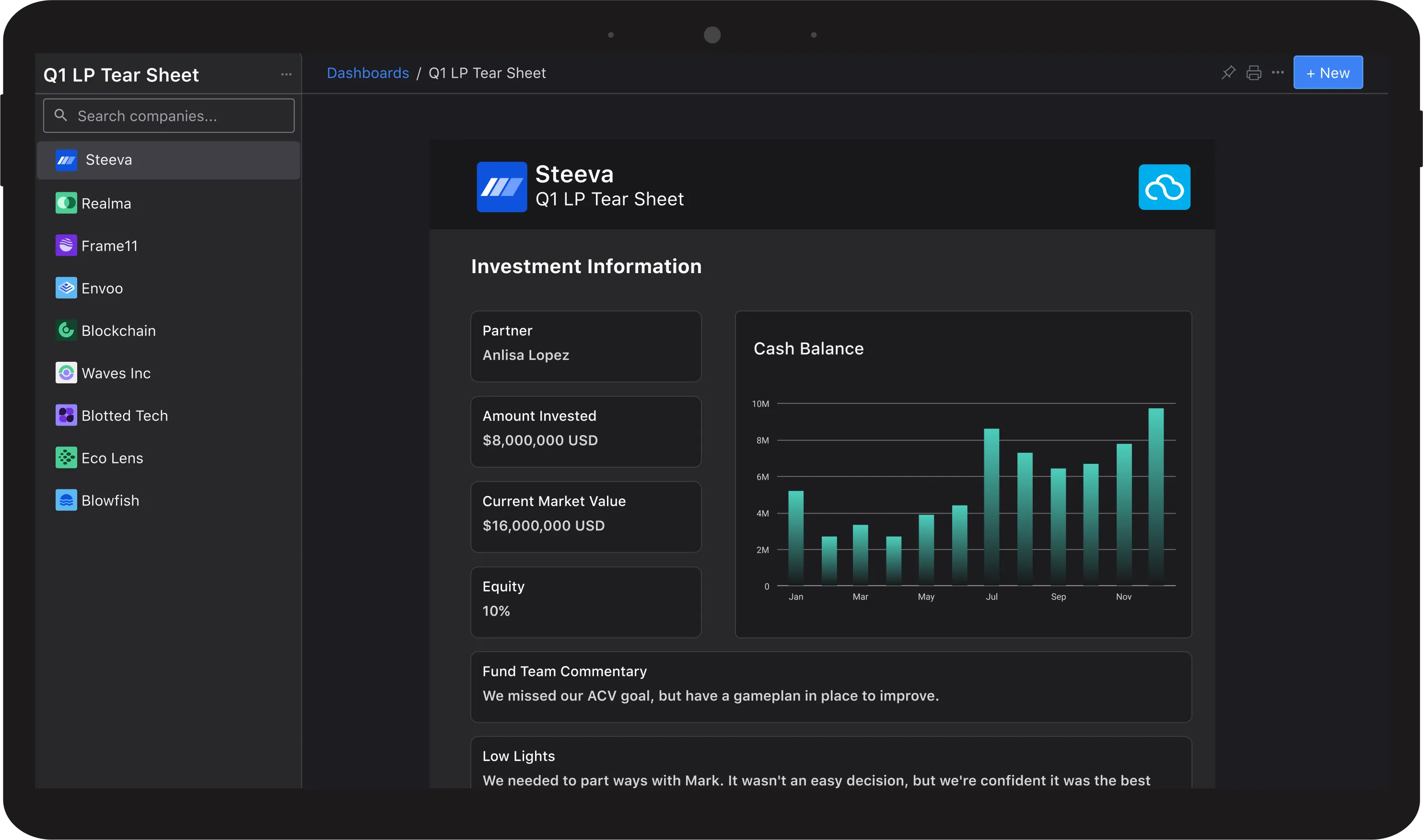
After an investment is made, the work shifts to long-term oversight. Investors use VC portfolio management software to collect updates, review metrics, and understand how companies are performing between meetings. A clear venture capital investment tracker allows teams to spot trends early and prepare for follow-on decisions with confidence.
Consistent tracking also improves relationships with founders. Clear expectations and standardized updates reduce friction and help both sides focus on the work that matters. Over time, this consistency supports better conversations and more informed support.
It also enables historical analysis. Looking back across multiple investments can reveal patterns that inform future strategy and capital allocation.
Reporting, Insights, and Decision Support Tools
Clear reporting supports better communication with internal teams and external stakeholders. Many investors rely on structured systems rather than ad hoc documents to prepare updates and analyze results. Reviewing a venture capital software list can help firms understand which tools focus on insights versus simple record keeping.
Good reporting tools also make it easier to answer common questions quickly. Whether preparing for partner meetings or external reviews, having reliable data on hand saves time and reduces uncertainty.
Over time, consistent reporting builds credibility. Stakeholders gain confidence when information is timely, accurate, and easy to understand.
The Role of AI in Venture Capital and Private Equity
Artificial intelligence is increasingly used to surface patterns, reduce manual data entry, and support research. AI tools for venture capital often focus on improving sourcing efficiency and data enrichment, while the best ai tools for private equity tend to emphasize scale and cross-portfolio analysis. In both cases, AI works best when paired with clear processes.
Importantly, these capabilities are meant to support human judgment rather than replace it. Investors still make decisions, but they do so with better context and fewer blind spots.
As these technologies mature, their value will depend on thoughtful implementation and clear goals rather than novelty.
Free and Low-Cost VC Tools to Get Started
Cost is a real concern for emerging managers. Some teams begin with VC tools free to test workflows and understand their needs before committing to paid software. Others look for VC tools free download options to experiment internally. A VC tools list free can be helpful early on, but most firms eventually upgrade as requirements become more complex.
Starting small can be a smart way to learn. Early experimentation helps teams identify what matters most before investing in more robust systems.
The key is to reassess regularly and avoid letting early choices limit future growth.
How Investors Evaluate and Compare VC Tools
Investors often compare usability, flexibility, and data quality when choosing software. Searches for the best VC tools or even top 10 best VC tools usually signal a desire for benchmarks rather than a single answer. Peer feedback matters, and some investors review discussions like best VC tools reddit to understand real-world experiences.
The most effective evaluations focus on fit rather than popularity. Tools that align with a firm’s strategy and habits tend to deliver more value over time.
Clear evaluation criteria also make it easier to gain internal buy-in and ensure consistent adoption.
Building a VC Toolset That Scales With Your Firm
The right system evolves as a firm grows. What works for a small team may break down as funds increase and portfolios expand. Evaluating the best venture capital software is less about rankings and more about alignment with strategy, team habits, and long-term goals. A thoughtful approach to venture capital software supports better decisions today and fewer rebuilds tomorrow.
Ultimately, software is an enabler. Firms that treat tools as part of their operating discipline are better positioned to move quickly, learn continuously, and build durable investment processes. Over time, this discipline becomes a competitive advantage rather than an operational burden.
Frequently Asked Questions
What are VC tools and why do venture capital firms use them?
VC tools are software systems designed to help venture capital firms manage deal flow, track portfolio performance, and report to stakeholders. Venture capital investors use these tools to centralize data, reduce manual work, and make more consistent decisions across sourcing, investing, and portfolio management.
What is included in a typical venture capital tech stack?
A typical venture capital tech stack includes tools for sourcing deals, managing pipelines, tracking portfolio metrics, and reporting performance. Many firms also use venture capital software for data analysis and collaboration. The goal is to create a connected system that supports the full investment lifecycle.
Are there free VC tools for early-stage or emerging managers?
Yes, some vc tools free options can help emerging managers test workflows and understand their needs. These tools often support basic tracking or organization but may lack advanced features. Many investors start with free venture capital software before upgrading as their fund and portfolio grow.
How do investors choose the best venture capital software?
Investors evaluate venture capital software based on usability, data quality, flexibility, and fit with their workflow. Rather than relying on rankings alone, firms assess whether vc tools support their strategy, team size, and reporting needs. Long-term scalability is often a key factor in the decision.
What is the role of AI in modern VC tools?
AI is increasingly used in vc tools to support sourcing, research, and data analysis. AI tools for venture capital can help surface patterns, enrich data, and reduce manual work. While AI does not replace investor judgment, it helps teams operate more efficiently and make better-informed decisions.