





Key Takeaways
-
The DACH region has emerged as Europe's primary engine for B2B and deep tech innovation with German startups alone securing 8.4 billion Euros in the last year.
-
Munich has officially overtaken Berlin in new startups per capita as capital flows toward physical AI and defense technologies across Germany, Austria, and Switzerland.
-
Founders can leverage aggressive non-dilutive capital including the 12 million Euro German R&D tax allowance cap and the 14 percent uncapped Austrian research premium.
-
Switzerland remains the global leader in deep tech intensity and robotics funding per capita while offering unique IP tax benefits like the Patent Box regime.
-
The 2026 landscape is defined by the Triple-Threat advantage of sovereign capital, high cross-border liquidity, and strategic partnerships with the German Mittelstand.
The DACH fundraising landscape entered 2026 with a distinct structural advantage. While other European hubs faced volatility, Germany, Austria, and Switzerland leveraged their industrial heritage to become the primary engine for B2B and hardware-intensive innovation.
In 2025, German startups alone secured €8.4 billion in venture capital, marking an increase of €1.3 billion from the previous year. A fundamental geographic shift has redefined the region. Munich has officially overtaken Berlin in new startups per capita, recording 19.3 startups per 100,000 inhabitants compared to Berlin's 16.8. This reflects a broader trend where capital is moving toward Physical AI, the intersection of extreme compute and physical capability in sectors like robotics, defense, and energy.
Austria has solidified its role as the region's climate-tech and deep-tech bridge. In 2025, the Austrian startup ecosystem grew by 21%, home to over 1,100 startups and two major unicorns, Bitpanda and GoStudent, which have attracted significant international attention to Vienna. Austria is now recognized as a global leader in industrial decarbonization, primarily relying on venture capital and robust public grants for climate innovation.
Switzerland remains the global leader in deep-tech intensity. The country secured over $3.6 billion in venture capital in 2025, ranking first in Europe for robotics funding and per-capita spinout value. This technical foundation is bolstered by ETH Zurich and the Technical University of Munich (TUM), which led Europe in funding rounds raised by graduates over the last year.
In this guide we will layout a strategic roadmap to navigating localized financial levers and provide a list of top VCs you can use to secure capital across Europe’s most resilient and technically advanced economic bloc.
The Investor List: 15 Top Venture Capital Firms in DACH
The following firms represent a mix of early-stage generalists and deep-tech specialists with headquarters or significant operations in Germany, Austria, and Switzerland.
Who are the leading investors in Germany?
Germany remains the region's largest capital market, with Berlin and Munich hosting the majority of high-velocity funds.
HV Capital (Munich & Berlin): One of the most established firms in Europe, HV Capital recently closed its largest fund to date and continues to back leaders in fintech and SaaS.

Earlybird (Berlin): Known for its pan-European approach, Earlybird maintains a massive footprint in Berlin, focusing on digital technologies and health tech. Founded in 1997, Earlybird invests in all growth and development phases of a company. Amongst the most experienced venture investors in Europe, Earlybird offers its portfolio companies not only financial resources but also strategic and operational support as well as access to an international network and capital markets.
Cherry Ventures (Berlin): Cherry Ventures is an early-stage venture capital firm led by a team of entrepreneurs with experience building fast-scaling companies such as Zalando and Spotify. The firm backs Europe's boldest founders, usually as their first institutional investor, and supports them in everything from their go-to-market strategy and the scaling of their businesses.
UVC Partners (Munich): Closely aligned with the Technical University of Munich, UVC is a leading investor in industrial AI, robotics, and mobility.

Point Nine (Berlin): A highly specialized seed fund focused exclusively on B2B software, crypto, and marketplaces.
Which venture capital firms are most active in Switzerland?
Switzerland's investor landscape is heavily weighted toward deep tech, life sciences, and Crypto Valley innovations in Zug.

Lakestar (Zurich): A global firm with deep Swiss roots, Lakestar invests from seed to growth, with a heavy 2026 focus on European sovereignty and deep tech.
Redalpine (Zurich): A major player in the Swiss ecosystem, Redalpine recently launched new funds in 2025 to back healthcare and technology ventures.
Verve Ventures (Zurich): Verve Ventures invests from EUR 500k to several million from Seed to Series B and beyond across Europe. Verve Ventures’ dedicated team helps companies with their most pressing needs such as hiring, client introductions and access to an expert network of high-profile individuals.
Founderful (Zurich): Specifically focused on the Swiss market, Founderful serves as a leading pre-seed fund for the country's most promising engineering spinouts.

Swisscom Ventures (Zurich/Bern): Swisscom Ventures is the corporate venture capital arm of Swisscom, which specializes in early-stage tech investments.
Who are the key capital providers in Austria?
Austria’s venture scene is concentrated in Vienna, characterized by a strong focus on climate tech and science-based startups.
3VC (Vienna): A European venture capital firm that partners with ambitious founders across DACH and CEE. They primarily target Series A rounds in category-defining technology sectors like AI, deep tech, and digital health.
Push Ventures (Vienna): We are an early-stage Venture Capital Firm investing in outstanding teams with convincing products and high growth potential.

UNIQA Ventures (Vienna): The venture arm of UNIQA Insurance Group and a pioneer in corporate-backed VC in Central Europe. They invest in late-seed and early-growth stages (Series A/B) with a focus on fintech, insurtech, and digital health.

Speedinvest (Vienna): We have 40 investment pros in Berlin, London, Paris, Munich, Vienna, San Fran & an in-house team of 20 operational experts to support you from day one. We fund early-stage Fintech, Digital Health, Consumer Tech, Network Effects, Deep Tech & Industrial Tech.
APEX Ventures (Vienna): A specialized deep-tech and medical-tech fund that seeks startups based on unique engineering or scientific discoveries.

aws Gründungsfonds (Vienna): Backed by the Austrian federal government, this fund provides critical later-seed and Series A capital to high-growth Austrian startups.
Top Accelerators and Incubators in the DACH Region
Germany’s Top Accelerators and Incubators
Germany’s ecosystem is characterized by strong corporate-startup collaboration and university-led innovation hubs, particularly in Berlin and Munich.
UnternehmerTUM (Munich): Frequently ranked as the leading innovation center in Europe, this hub is the gateway to the Munich ecosystem. It provides direct links to the Technical University of Munich and global corporate giants like BMW and Siemens.
Hubraum (Berlin): As the tech incubator for Deutsche Telekom, Hubraum connects early-stage startups with the corporate giant's vast network, focusing on 5G, AI, and IoT.

SpinLab - The HHL Accelerator (Leipzig): Rated as one of the top three accelerators in Germany, SpinLab supports startups in e-health, energy, and smart city sectors through a structured six-month program.
Switzerland’s Top Accelerators and Incubators
Switzerland's resources are heavily focused on deep tech, life sciences, and fintech, leveraging world-class research institutions such as ETH Zurich and EPFL.
Venture Kick (Zurich/Lausanne): A leading philanthropic program that provides up to CHF 150,000 in non-dilutive pre-seed funding for university spin-offs.
Fongit (Geneva): Switzerland’s premier innovation incubator supporting deep-tech startups in sectors like Medtech and Cleantech with long-term incubation support.
Austria’s Top Accelerators and Incubators
Austria offers a highly integrated ecosystem with strong public backing and specialized hubs for climate tech and social impact.
weXelerate (Vienna): Austria’s largest startup hub, connecting early-stage companies with corporate partners and the broader CEE market.
Accent (Wiener Neustadt): Lower Austria’s high-tech incubator that provides intensive coaching and financial support over the first 18 to 24 months of a startup's life.

Impact Hub Vienna (Vienna): A core pillar of the social entrepreneurship scene in Austria, this hub provides specialized incubation programs for impact-driven startups. It offers access to a global network of social innovators and tailored mentoring for sustainable business model.
Region-Specific Opportunities: Grants, Tax Credits, and Angel Syndicates
The DACH ecosystem is defined by its hybrid funding model. By layering non-dilutive government grants with private angel capital, founders can extend their runway by 6 to 12 months before approaching institutional VCs.
What are the most active Angel Investor Networks in 2026?
Angel investing in the region has moved toward professionalized syndicates. These groups provide the Trust Signal required for German and Swiss institutional funds to follow.
- SICTIC (Switzerland): The Swiss ICT Investor Club remains the most active angel network in Switzerland. In 2025, Swiss startups secured over $3.6 billion in funding, with SICTIC-led rounds serving as a primary entry point for tech-heavy ventures.
- Business Angels Deutschland e.V. (BAND): The umbrella organization for German angels. They manage the INVEST grant, which provides a 20% tax-free acquisition grant for private investors backing innovative startups.
- aaia (Austrian Angel Investors Association): Austria’s leading network, recently focused on bridging the "Green-Tech" gap by syndicating deals for climate-positive hardware. In 2025, 33% of Austrian firms viewed the net-zero transition as a major business opportunity, significantly above the EU average.
- Verve Ventures (Switzerland): A community-driven investment platform that allows accredited investors to join rounds alongside institutional capital, focusing on biotech and deep tech.
How can founders maximize regional tax credits and grants?
In 2026, the DACH region offers some of the most competitive R&D incentives in the world. These are often "cash-back" programs rather than simple deductions.
- The German Growth Booster Act (2026): Effective January 1, this legislation increased the R&D tax allowance cap to €12 million annually. For the first time, startups can claim a "super-deduction" on innovation-related labor costs even before they are profitable.
- Austria’s 14% Research Premium: This remains a gold standard for European founders. It is an uncapped, 14% cash payment based on R&D expenditures, paid directly to the company by the tax office regardless of profit.
- Swiss Innovation Boosters: Managed by Innosuisse, these programs offer project set-up assistance and funding to launch radical ideas in a collaborative environment, with special focus on sectors like Pharma & Biotech and Industrials & Engineering.
- Vienna Start-up Grant: A specific 2026 initiative providing up to €10,000 for innovators and founders to develop scalable business models during their first year.
Why is the Mittelstand your most important strategic partner?
The German Mittelstand, the thousands of highly specialized SMEs that form the backbone of the economy, is an underutilized resource for founders. In 2026, these companies are aggressively seeking AI and automation partners to combat labor shortages and energy costs.
- The Pilot-to-Partner Pipeline: Startups are using "de:hub" initiatives to host cooperation between SMEs and research institutions. This provides both non-dilutive capital and a built-in Design Partner for B2B products.
- The German Startup Pavilion: A record 200 guests from the German innovation ecosystem, including major Mittelstand associations (BVMW), are participating in global summits in 2026 to connect startups with industrial buyers.
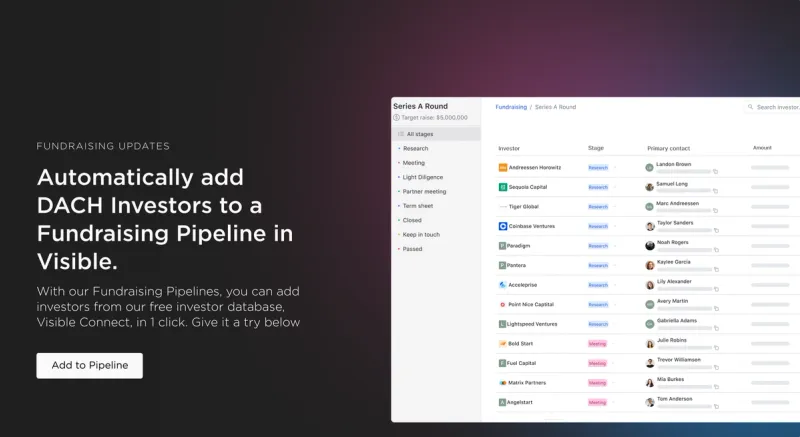
Connect With Investors in DACH Using Visible
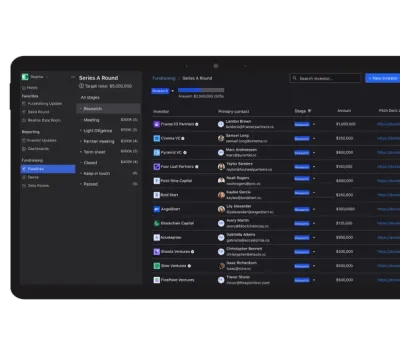
At Visible, we often times compare a fundraise to a B2B sales and marketing funnel. At the top of your funnel, you are finding new investors. In the middle, you are nurturing and pitching potential investors. At the bottom of the funnel, you are working through diligence and ideally closing new investors.
With the introduction of data rooms, you can now manage every aspect of your fundraising funnel with Visible.
- Find investors at the top of your funnel with our free investor database, Visible Connect and find a filtered list of investors.
- Track your conversations and move them through your funnel with our Fundraising CRM
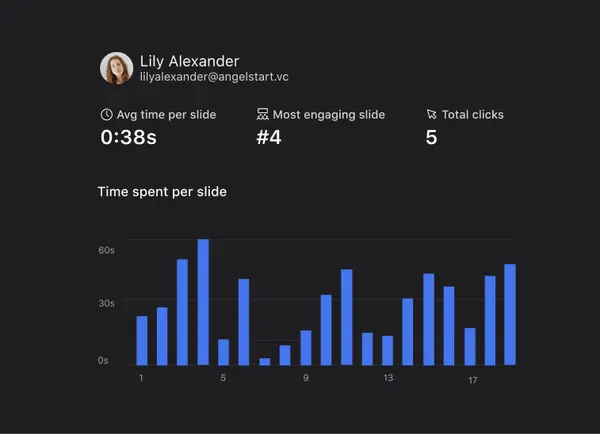
- Share your pitch deck and monthly updates with potential investors
- Organize and share your most vital fundraising documents with data rooms
Manage your fundraise from start to finish with Visible. Give it a free try here.
Frequently Asked Questions
What are the dominant investment trends in the DACH region for 2026?
The 2026 landscape is defined by Physical AI and industrial resilience. Investors have moved away from generalist SaaS toward Sovereign Tech, startups solving critical infrastructure problems in energy, defense, and advanced manufacturing. Munich has officially overtaken Berlin in startups per capita, signaling a regional shift toward hardware-integrated software
How can startups claim the €12 million R&D tax allowance in Germany?
Effective January 1, 2026, the German Growth Booster Act increased the R&D tax allowance cap to €12 million annually. Founders can claim a 20% flat-rate allowance on eligible operating expenses, including personnel costs for employees working on innovation projects. This is available even to pre-profit startups as a tax-free cash refund.
Which DACH cities have the highest VC density in 2026?
Munich, Berlin, and Zurich remain the Big Three for capital density. However, Vienna and Leipzig are emerging as specialized hubs for climate tech and e-health. Munich’s rise is driven by its proximity to the Mittelstand and the Technical University of Munich (TUM), which led Europe in graduate-led funding rounds this year.
What is the advantage of raising capital in Austria vs. other EU countries?
Austria’s "Gold Standard" is its 14% Research Premium (Forschungsprämie). Unlike many EU grants, this is an uncapped, non-dilutive cash payment based on total R&D expenditure. Additionally, Vienna has become a premier "bridge hub" for startups targeting Central and Eastern Europe (CEE).
How does Switzerland’s Patent Box regime benefit tech founders?
Swiss cantons like Zurich and St. Gallen offer a Patent Box that can reduce corporate tax on income from qualifying patents by up to 90%. When combined with R&D super-deductions of up to 150%, Switzerland remains the most tax-efficient location for deep-tech and IP-heavy ventures in 2026.