























Key Takeaways
-
Investor relations software eliminates manual data entry, acting as a single, secure source of truth for your cap table, financial metrics, and stakeholder communications.
-
Using a dedicated CRM for fundraising prevents warm leads from slipping through the cracks, helping you accelerate the 4-to-6-month average timeline to close a Seed or Series A round.
-
The best investor relations software goes beyond contact management, offering visual Kanban pipelines, automated accounting integrations (like Xero and QuickBooks), and secure data rooms for due diligence.
-
An investor relations CRM enables highly segmented outreach, allowing founders to easily tailor their standardized updates and pitch narratives for specific regional venture capital ecosystems.
-
Tracking deep engagement analytics, such as pitch deck view times and update open rates, moves founders away from vague relationship building and provides hard data to negotiate from a position of strength.
Managing a cap table, fielding late-night due diligence requests, and wrangling data for monthly updates shouldn't pull you away from building your product. Yet, for too many founders, stakeholder communication is a chaotic mix of fragmented email threads and outdated spreadsheets.
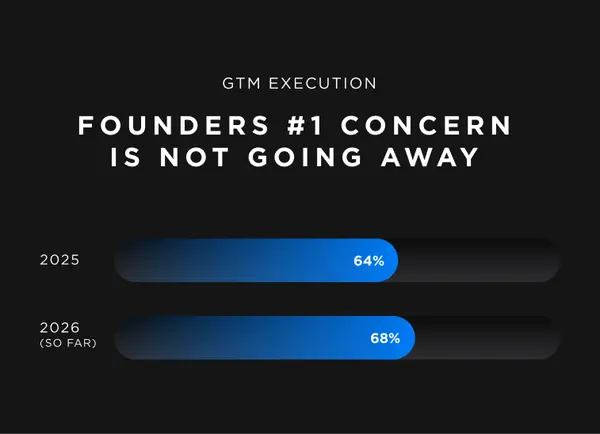
With over $340 billion invested in US VC-backed companies recently, the competition for follow-on funding is fierce. To stand out and close rounds quickly, you need a single source of truth. Implementing dedicated investor relations software is what separates disorganized startups from those that run an airtight, professional fundraising process.
The ROI of Regular Investor Updates: How Transparency Drives Follow-On Funding
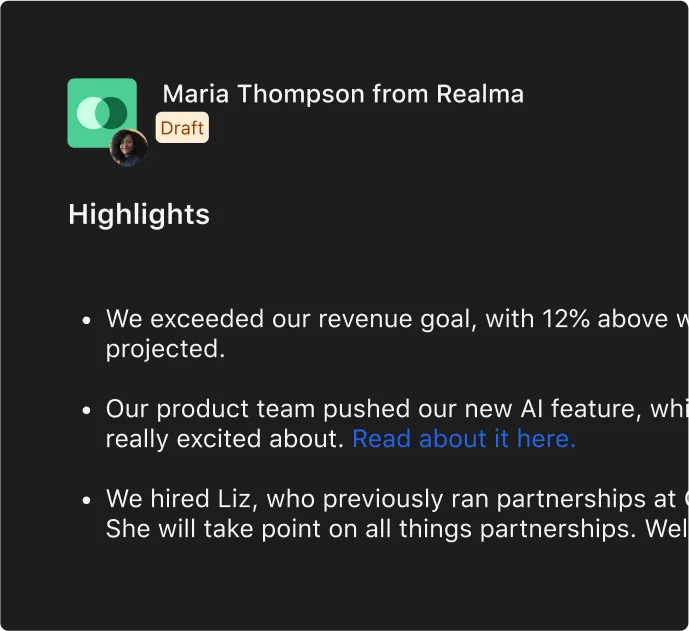
Regular investor updates directly correlate with higher success rates for follow-on funding. By maintaining an organized investor relations database, founders keep stakeholders actively engaged, streamline the due diligence process, and easily activate their investors' networks for key hires and warm introductions.
Venture capitalists can only help structure a bridge round, introduce you to a pivotal new executive, or advise on a strategic pivot if they have up-to-date runway and burn metrics. An organized IR workflow facilitates this rapid triage.
Here is exactly what investors want to see tracked and reported:
- Financial Health: Current burn rate, remaining cash runway, and gross margins.
- Traction: Month-over-month (MoM) revenue growth or daily active user (DAU) expansion.
- Milestones: Major product launches, key enterprise contracts won, or crucial strategic hires.
- The "Ask": Specific, actionable requests for intro routing, hiring support, or go-to-market feedback.
Founders who consistently send clear, data-backed monthly updates are significantly more likely to raise their next round. It signals operational competence and builds the exact kind of trust we look for when writing follow-on checks or making warm introductions to lead investors.
What is Investor Relations (IR) Software? (Definition & Core Features)
Investor relations (IR) software is a specialized CRM platform that founders use to centralize investor communications, track fundraising pipelines, and automate performance reporting. Unlike traditional CRMs, IR software is purpose-built to manage cap table data, due diligence document sharing, and stakeholder updates.
Rather than relying on generic tools, modern founders use IR software to replace fragmented email threads, messy Google Sheets, and disconnected PDFs with a unified system. It functions as a single source of truth designed specifically for venture-backed growth.
Here are the core workflows a dedicated IR platform unlocks:
- Fundraising Pipeline CRM: Track capital commitments, warm introductions, and follow-ups across different VC tiers and angel networks.
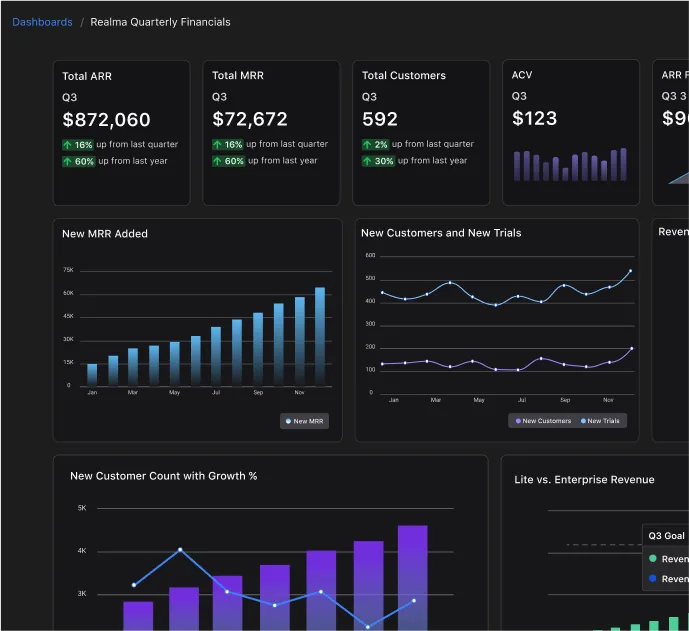
- Automated Data Integrations: Connect directly to financial tools like Stripe, QuickBooks, and Xero to pull live revenue and burn metrics without manual data entry.
- Standardized Update Templates: Use pre-built frameworks to send consistent, professionally branded monthly or quarterly updates.
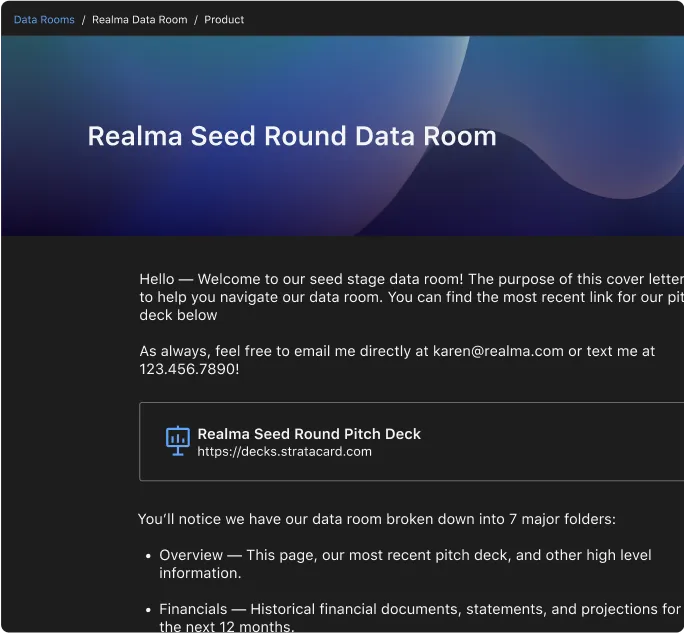
- Secure Document Sharing: Host pitch decks, historical financials, and cap tables for streamlined, frictionless due diligence.
4 High-ROI Benefits of Investor Relations Software for Startups
The true value of investor relations software lies in the elimination of manual data entry and the mitigation of human error in your financial reporting. Automated dashboards free up your time so you can focus on actually running the business and closing the round, rather than wrangling spreadsheets.
"Companies with strategic investor relations command premium valuations and maintain funding options even in downturns." Bessemer Venture Partners
Organized founders signal deep operational competence to VCs, and the right software makes that organization effortless. Here are the four highest-ROI benefits:
- Consolidating the Tech Stack: Centralize all stakeholder communications, pitch decks, and financial KPIs into one accessible dashboard.
- Professionalizing the "Ask": Standardized reporting templates ensure every stakeholder gets clear, digestible updates, making it significantly easier for them to say "yes" to your specific requests for help.
- Securing Sensitive Data: Granularly control who has access to your cap table and historical financials with permission-based viewing during due diligence.
- Executing Targeted Outreach: Build highly segmented investor lists. When pitching regional venture capital ecosystems, whether that means targeting funds in Southeast Asia, the Nordics, or the DACH region, an IR CRM allows you to easily tailor your narrative to those specific geographic investor preferences.
How an Investor CRM Accelerates the Fundraising Pipeline
Managing a fundraising funnel is a chaotic process that quickly breaks traditional spreadsheets. According to recent 2026 data, the average Seed or Series A round now requires dedicated outreach to 80–120+ investors and takes anywhere from 4 to 6 months to officially close. When managing a cap table and high-volume outreach, a dedicated CRM for fundraising prevents warm leads from slipping through the cracks during this marathon process.
Whether you are building alongside our fundraising roadmap or navigating your first major institutional round, your success depends on structured execution. Here is the 3-step founder playbook for running an airtight pipeline:
- Step 1: Target List Building: Begin by tagging VCs by check size, sector focus, and geographic region. This allows you to effectively separate tier-1 Silicon Valley funds from local angel networks and seed funds in emerging, highly active ecosystems like Maine, Arkansas, and Rhode Island.
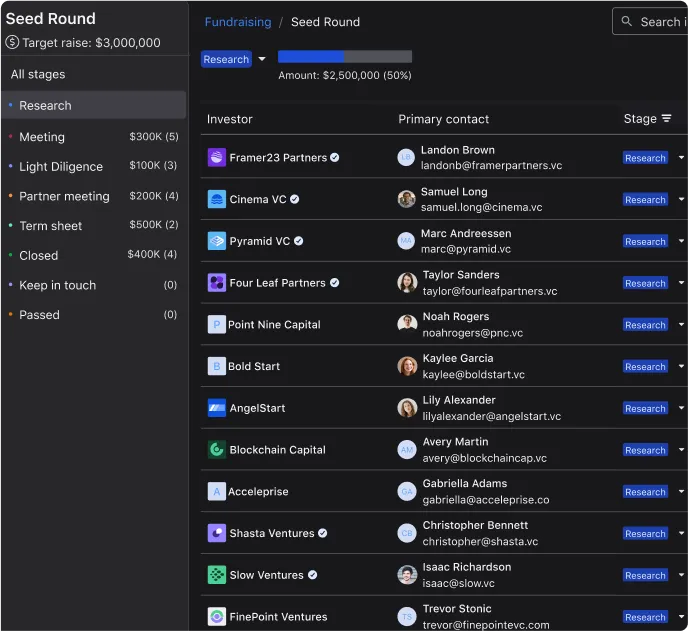
- Step 2: Pipeline Management: Using an investor relations CRM allows you to move investors seamlessly through defined stages (e.g., Contacted, First Meeting, Partner Pitch, Due Diligence, Committed) so you always know exactly who needs a follow-up email.
- Step 3: Due Diligence Fulfillment: Use integrated data rooms to instantly share cap tables, revenue cohorts, and historical financials the moment a VC digs in and asks for deeper metrics.
5 Must-Have Features in a Modern Investor Relations CRM
When evaluating the best CRM for investor relations, do not settle for basic contact management. The best investor relations software will always include these five non-negotiable features:
- With tools like Visible's Investor Pipelines, you can instantly track the status of every single investor conversation on a Kanban board and identify bottlenecks in your funnel.
- Automated Data Integrations: Look for native connections, such as Visible's direct integrations, with tools like Salesforce, HubSpot, Xero, and QuickBooks to pull live financial and marketing data directly into your dashboard, eliminating manual entry.
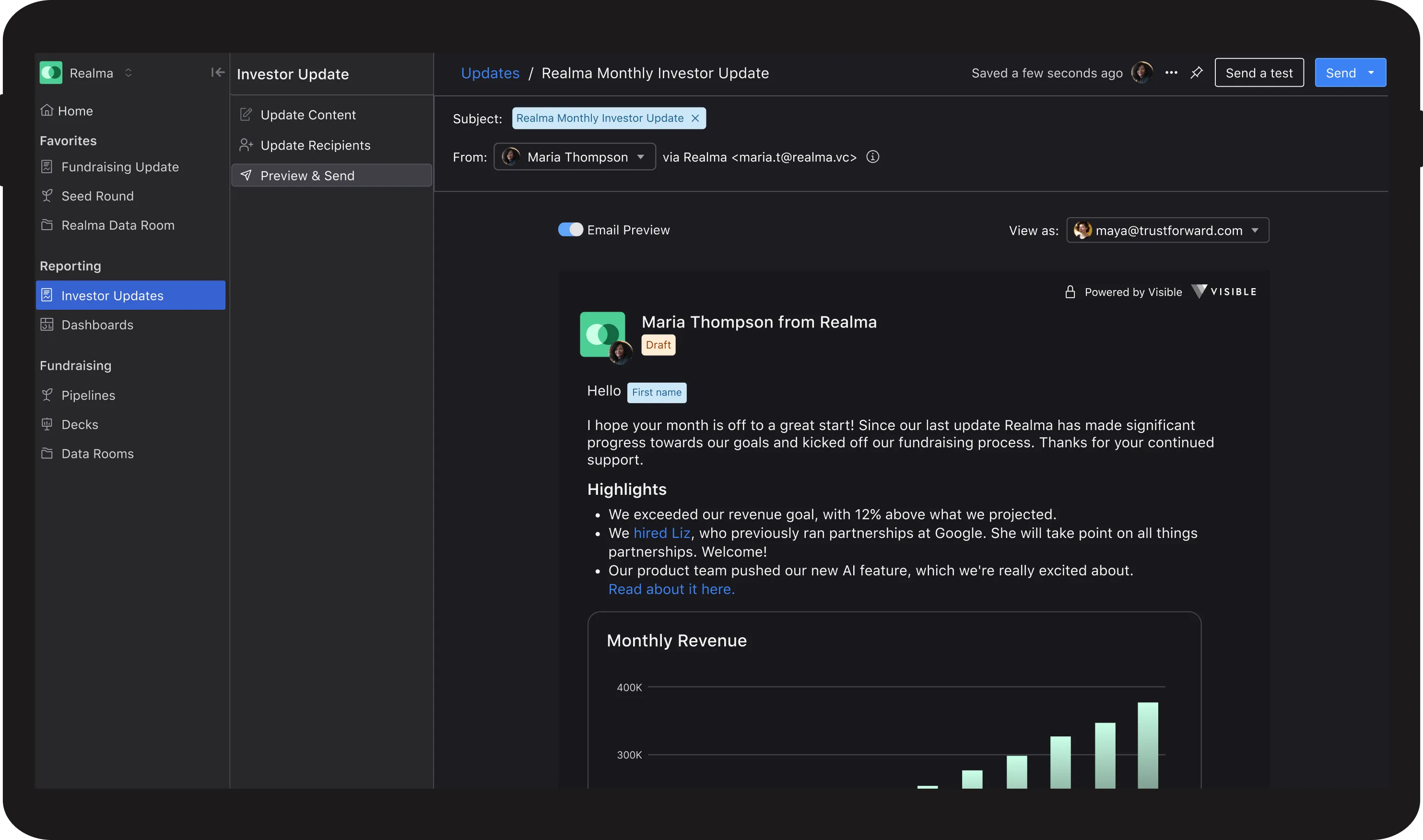
- Platforms like Visible's Updates tool provide pre-built, branded monthly investor update templates that allow you to send out professional, data-driven updates in minutes, not hours.
- Tear Sheets & Professional Templates: Pre-built, branded monthly investor update templates that allow you to send out professional updates in minutes, not hours.
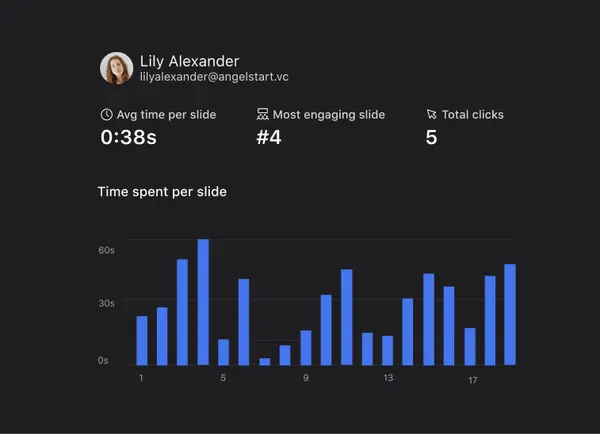
- Engagement Analytics: Leverage Visible's Pitch Deck Analytics for granular open-rate and view-time tracking to see exactly which VCs are actually reviewing your pitch deck and which specific slides hold their attention.
- Permission-Based Data Rooms: Utilize Visible's secure Data Rooms for integrated file hosting of all your sensitive due diligence documents, ensuring your cap table and financials are only visible to the right stakeholders at the right time through advanced access controls.
How to Implement Investor Relations Software in 4 Steps
Transitioning to a dedicated platform like Visible is straightforward if you follow a structured onboarding process. Here is a concrete, 4-step checklist to implement your new IR CRM:
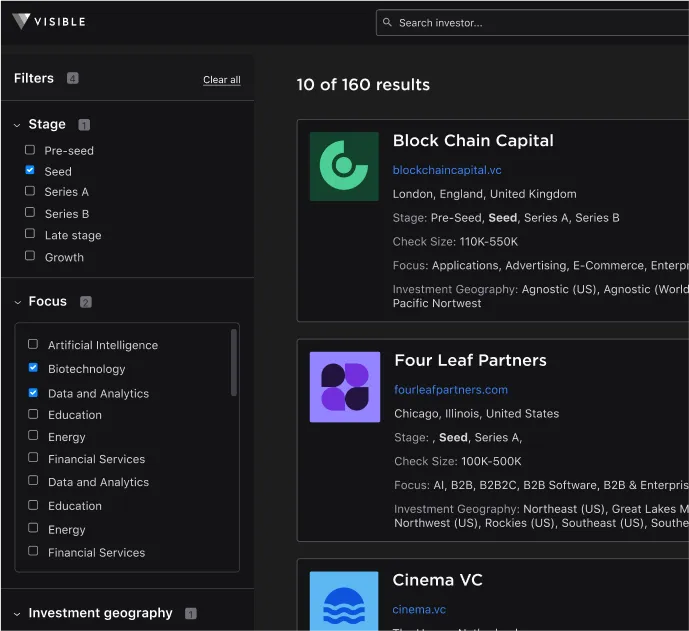
- Step 1: Data Migration & Pipeline Sourcing: Audit your current cap table and export active contacts from messy spreadsheets to establish a clean baseline. Then, supplement your pipeline by using a purpose-built database like Visible Connect to discover and route right-fit VCs directly into your funnel.
- Step 2: Custom Field Setup: Utilize Visible's CRM properties to tag your investors by type (e.g., Angel, Micro-VC, Growth), average check size, and historical engagement levels to enable highly targeted outreach.
- Step 3: Template Creation: Leverage Visible's native Updates builder to create your standard Monthly Update, Quarterly Financial Report, and "Capital Call" templates upfront, ensuring long-term brand consistency.
- Step 4: Integration Sync: Connect your core accounting software (e.g., Xero, QuickBooks) and email client (e.g., Gmail, Outlook) directly into your Visible workspace to automate data flow and permanently eliminate manual entry.
Measuring IR Success: Metrics Founders Should Actually Track
Stop measuring your investor relations by vague "relationship building" and start looking at the hard analytics modern IR platforms provide. By tracking forward activity—like seeing if a VC forwarded your pitch deck to a partner—you gain significant leverage in negotiations.
Here are the exact metrics founders should track in their IR software:
- Update Open Rates: Aim for >70% consistent engagement from your existing investors.
- Deck View Time: Identify exactly which slides VCs spend the most time reading to refine your pitch.
- Time-to-Close: Measure how a structured, centralized CRM actively shortens the due diligence phase.
Transitioning from manual spreadsheets to modern investor relations solutions empowers founders to build confidence and secure follow-on capital faster
Frequently Asked Questions
What is investor relations software?
Investor relations software is a specialized CRM platform that helps startup founders centralize investor communications, track their fundraising pipeline, and automate performance reporting.
Do investor reporting tools improve fundraising efforts?
Yes, investor reporting tools significantly improve fundraising by automating metric sharing and standardizing professional updates. This structured efficiency builds immediate credibility with venture capitalists, streamlining the due diligence process and helping investors make faster, data-informed decisions about follow-on funding rounds.
What features are essential in an investor CRM?
Essential features in an investor CRM include visual Kanban pipelines, automated data integrations with accounting tools, pre-built reporting templates, and engagement analytics. Founders must also prioritize permission-based data rooms to securely host sensitive cap tables and historical financials during due diligence.
Can an investor CRM integrate with my current tools?
Yes, a modern investor CRM seamlessly integrates with your existing tech stack. Top platforms connect directly with financial software like Xero and QuickBooks, as well as email clients like Gmail and Outlook, ensuring live revenue metrics and communications sync automatically without manual entry.
How do I measure the success of my investor updates?
You measure success by tracking specific engagement analytics provided by your IR software. Founders should monitor update open rates, aiming for over 70% engagement, track pitch deck view times to see which slides resonate, and measure overall time-to-close for active fundraising pipelines.
Is there a free investor relations software option for early-stage startups?
Many founders start with free spreadsheets, but this quickly leads to data errors and missed follow-ups. While searching for the best CRM for investor relations free of charge, remember that investing in a dedicated platform pays for itself by shortening the time it takes to close your round.