








Key Takeaways
- Learn how modern venture capital teams evaluate the best tools for venture funds, including venture crm and vc crm systems that support investor relations, deal flow, and long-term fund performance.
- Understand where ai for venture capital and vc ai tools deliver real value today, with practical examples of how ai tools for venture capital support research, reporting, and portfolio monitoring.
- Get clarity on emerging trends like ai agents for venture capital and how investors compare a growing list of ai tools for venture capital without relying on hype or brand-driven rankings.
- See how venture and private equity tooling overlaps, including when private equity ai tools and best ai tools for private equity become relevant as funds scale and reporting needs increase.
- Learn how experienced investors research software through peer insights and community discussions, including best tools for venture funds reddit and best crm for venture capital reddit, to make confident, informed decisions.
Running a venture fund today involves far more than selecting investments. Fund managers are responsible for managing relationships, tracking performance, communicating with stakeholders, and making decisions based on incomplete information. As funds grow and portfolios expand, operational complexity increases quickly, often faster than teams expect.
This guide walks through the best tools for venture funds and explains how investors can think about building a modern, flexible tech stack without getting overwhelmed. It is designed for investors who want clarity on what types of tools exist, how they are used in practice, and how to evaluate them without relying on hype or brand recognition.
Rather than offering a top 10 best tools for venture funds list, this article focuses on categories, use cases, and evaluation criteria so investors can choose tools that fit their fund’s size, strategy, and stage.
How Venture Funds Use Software Today
Venture funds rely on software to support every stage of the fund lifecycle, from fundraising through portfolio management and reporting. As fund teams remain relatively small, software plays a critical role in helping them operate efficiently without adding headcount.
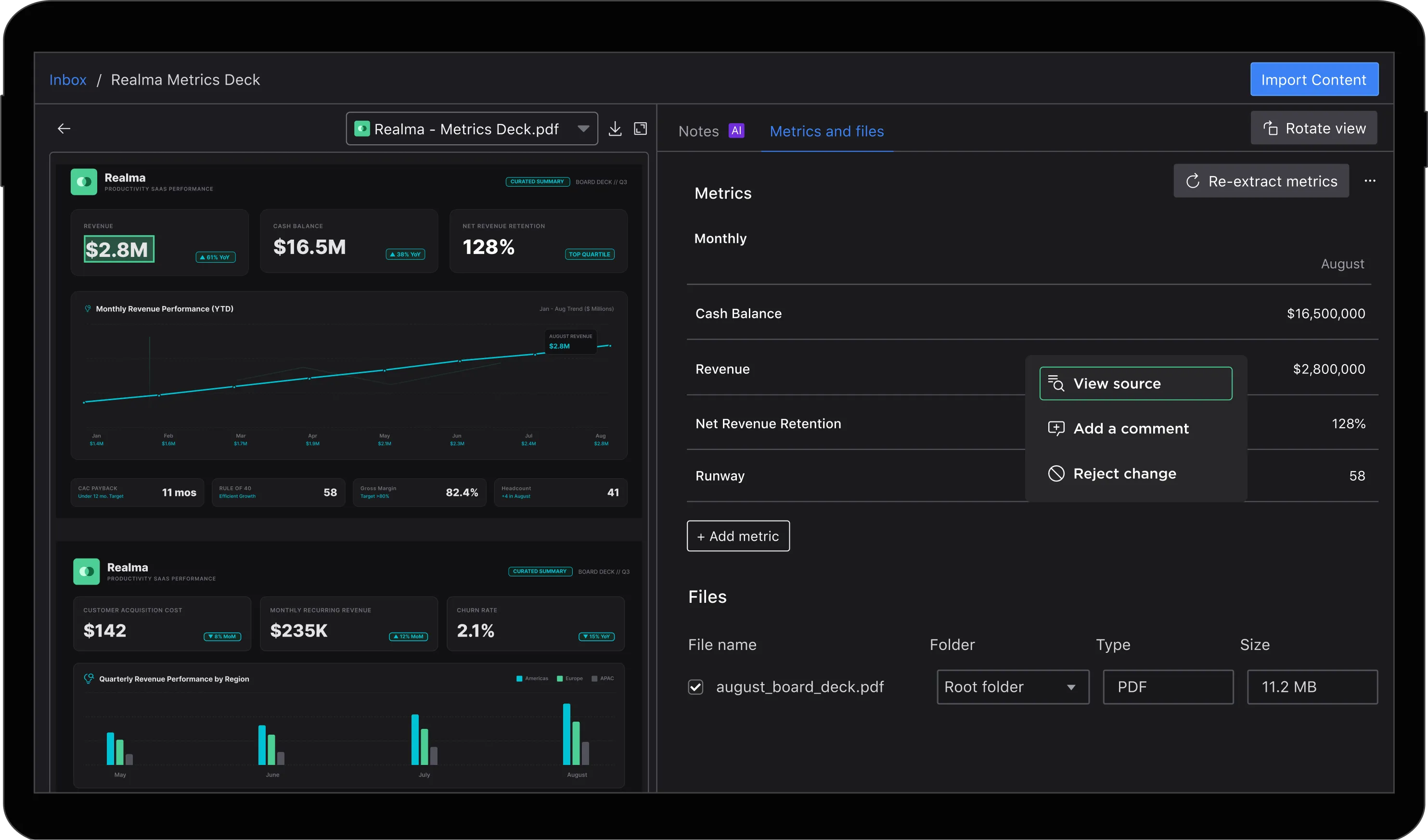
At the center of most stacks is a relationship system that functions as a venture crm. This system tracks limited partners, founders, co-investors, and prospects in one place, creating a shared source of truth across the firm. Many teams also refer to this system as a vc crm because it supports both investor relations and deal flow management.
Over time, software also becomes a record of institutional memory. Historical conversations, past decisions, and performance trends help teams maintain continuity as partners, associates, or fund strategies evolve.
Core Tool Categories Every Venture Fund Should Understand
Before evaluating individual products, it helps to understand the main categories of tools most funds rely on. Investor relationship management tools support communication, interaction tracking, and organization across a growing network. This is often where investors evaluate options described as the best crm for venture capital or the best crm for investor relations.
Fund operations and reporting tools support capital calls, distributions, audits, and performance summaries. Portfolio monitoring tools help track company metrics, founder updates, and overall fund health over time, allowing teams to focus on trends rather than isolated data points. Research and sourcing tools support diligence, market analysis, and pipeline development by creating structure around how opportunities are reviewed and compared.
Many investors validate their choices by reviewing peer discussions, including best crm for venture capital reddit threads, to understand tradeoffs and implementation challenges.
AI Tools and Automation in Venture Capital
Artificial intelligence is becoming more common across venture operations, primarily as a way to save time and reduce manual effort. In practice, ai for venture capital focuses on augmenting existing workflows rather than replacing human judgment.
Common use cases include summarizing founder updates, identifying changes in portfolio performance, and supporting research workflows by processing large volumes of unstructured data. These capabilities are often described broadly as ai tools for venture capital or vc ai tools, particularly when teams are early in their adoption journey.
When evaluating the best ai for venture capital, investors tend to focus on trust, explainability, and how outputs can be validated before being shared internally or externally.
The cost of trying has fallen a long way. Justin Hilliard of Rebel Fund put scraping the portfolios of a set of relevant funds and ingesting them into a monitoring system at roughly $100 of Claude usage and about three days of work.
AI Agents and Advanced Use Cases for Funds
Some venture teams are beginning to explore more advanced automation through ai agents for venture capital. These systems are designed to run ongoing workflows with limited manual input, allowing teams to continuously monitor activity across their fund without constant oversight.
Examples include agents that track portfolio performance against benchmarks, monitor communications for important signals, or surface insights from internal data on a recurring basis. Many investors start by reviewing a list of ai tools for venture capital to separate practical solutions from experimental ones.
Community-driven research plays an important role at this stage. Discussions in ai tools for venture capital reddit threads often surface lessons that are difficult to learn through demos alone.
Private Equity and Venture Overlap in Tooling
As venture funds mature, their operational needs often begin to overlap with those of private equity firms. This is especially true around reporting depth, financial analysis, and compliance expectations from limited partners.
Because of this overlap, some investors evaluate private equity ai tools alongside venture-focused solutions. Searches for best ai tools for private equity often reflect a desire for more advanced analytics, forecasting capabilities, and long-term performance tracking that can support more complex fund structures.
How Investors Research and Compare Tools
Most investors do not choose tools based on marketing claims alone. Instead, they rely on peer recommendations, hands-on trials, and feedback from other fund managers who have faced similar operational challenges.
Online communities and professional networks play a meaningful role in this process. Searches such as best tools for venture funds reddit highlight how investors seek candid insight into setup effort, ongoing maintenance, and real adoption across teams.
What to Look for When Choosing Tools for Your Fund
When evaluating software, investors benefit from focusing on clarity and long-term fit rather than feature volume. The right tools should be intuitive to use, flexible enough to evolve with the fund, and capable of producing consistent, reliable data that supports decision-making.
This is particularly important when evaluating best ai tools for venture capital, where incremental efficiency gains often matter more than ambitious but unproven functionality. Tools should reduce friction, not introduce new operational burden.
Justin Hilliard, Principal at Rebel Fund, keeps the firm's own building to its sourcing algorithm and buys the rest: "Everything else that supports that, we're not in the business of building LinkedIn scrapers. We don't care about that."
Final Thoughts on Building a Modern Venture Tech Stack
There is no single correct tech stack for every venture fund. The most effective approach is to start with current needs, choose tools that reduce operational drag, and leave room to adapt as the fund grows.
By understanding core tool categories, approaching automation thoughtfully, and learning from peers, investors can build a durable foundation that supports strong decision-making, consistent communication, and long-term fund performance.
Frequently Asked Questions
What are the best tools for venture funds today?
The best tools for venture funds help investors manage relationships, track portfolio performance, and streamline reporting. This often includes a Venture CRM or VC CRM for investor relations, portfolio monitoring software, and emerging AI tools for venture capital that reduce manual work while improving insight quality.
How do AI tools for venture capital actually help investors?
AI tools for venture capital help investors save time by summarizing founder updates, identifying trends across portfolio data, and supporting research workflows. When applied thoughtfully, AI for venture capital improves efficiency and consistency without replacing human judgment, especially for small teams managing large networks.
What is the difference between a Venture CRM and a traditional CRM?
A venture CRM is designed specifically for venture capital workflows, including deal flow tracking, founder relationships, and limited partner communication. Unlike traditional CRMs, VC CRM systems account for long sales cycles, multi-stakeholder relationships, and ongoing portfolio monitoring needs common to venture funds.
Are AI agents for venture capital widely used today?
AI agents for venture capital are still emerging, but are gaining interest among more advanced funds. These tools automate ongoing workflows, such as monitoring portfolio performance and surfacing insights from internal data. Most investors start by reviewing a list of AI tools for venture capital before adopting agent-based automation.
How do venture funds research and compare software tools?
Most investors research the best tools for venture funds through peer recommendations, hands-on trials, and community feedback. Searches like best tools for venture funds reddit or best CRM for venture capital reddit reflect how investors validate real-world usability, setup effort, and long-term fit before committing to new systems.
When should venture funds consider private equity AI tools?
Venture funds often consider private equity AI tools as they scale and reporting needs become more complex. Best AI tools for private equity may offer deeper analytics and forecasting capabilities that appeal to multi-fund platforms or later-stage strategies with longer investment horizons.