



















Key Takeaways
-
Upgraded virtual data room software is essential for venture capital fundraising in 2026 as average Series A due diligence processes now take four weeks longer to complete. Relying on basic consumer cloud storage is a significant operational risk that can delay term sheets and expose startups to average data breach costs.
-
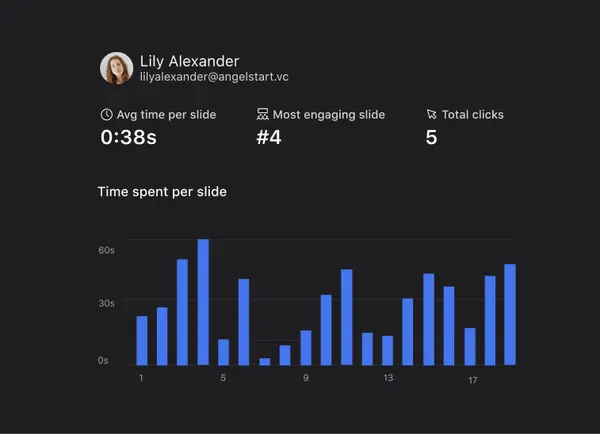
Founders gain a critical strategic advantage during M&A negotiations by using advanced viewer analytics to track exactly which pitch deck slides potential buyers analyze the most. This real-time engagement data allows SaaS startups to prioritize the most interested investors and negotiate much stronger financial terms.
-
Transitioning from free cloud folders to dedicated platforms is mandatory the moment a startup moves from a pre-seed stage to a priced Seed or Series A round. Top-tier institutional investors require enterprise-grade compliance and dynamic watermarking to securely protect sensitive intellectual property and corporate legal agreements.
-
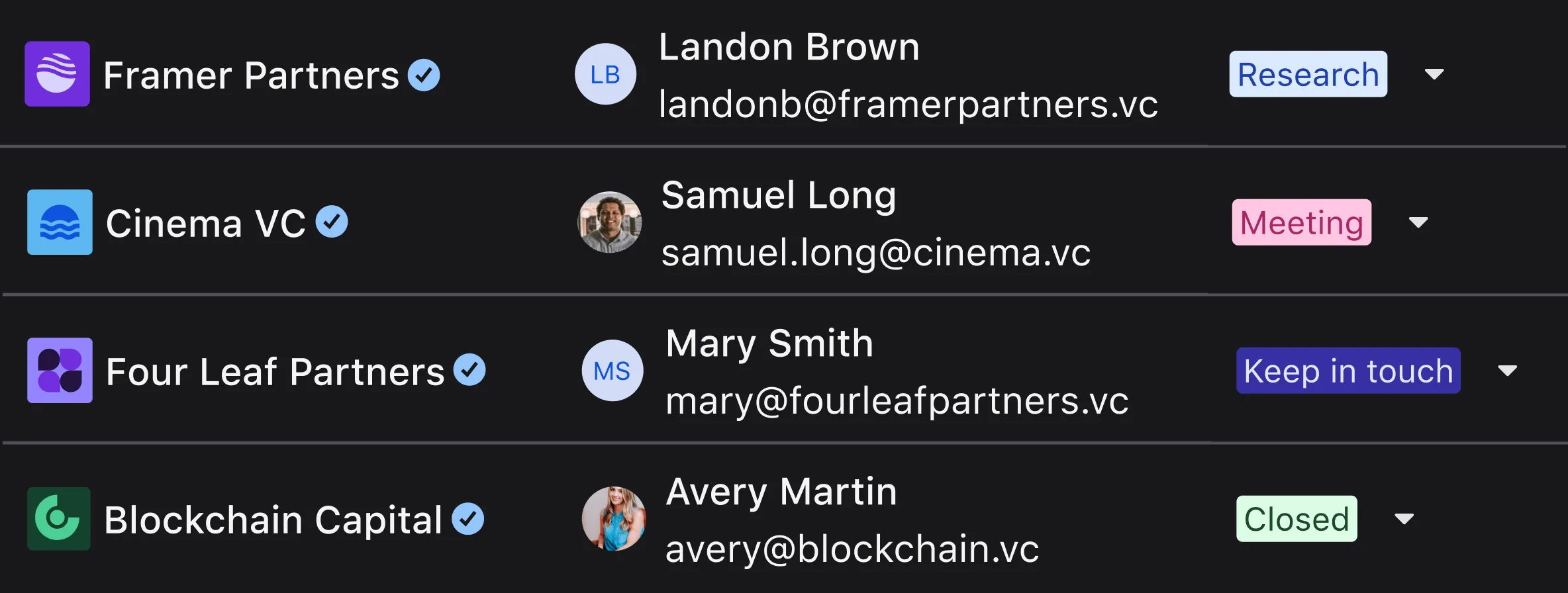
Choosing an integrated investor relations platform like Visible helps founders easily bridge the gap between their fundraising CRM and their secure corporate documents. Centralizing these operational workflows eliminates disorganized email threads and protects early runway from the unpredictable per-user pricing models of legacy software providers.
-
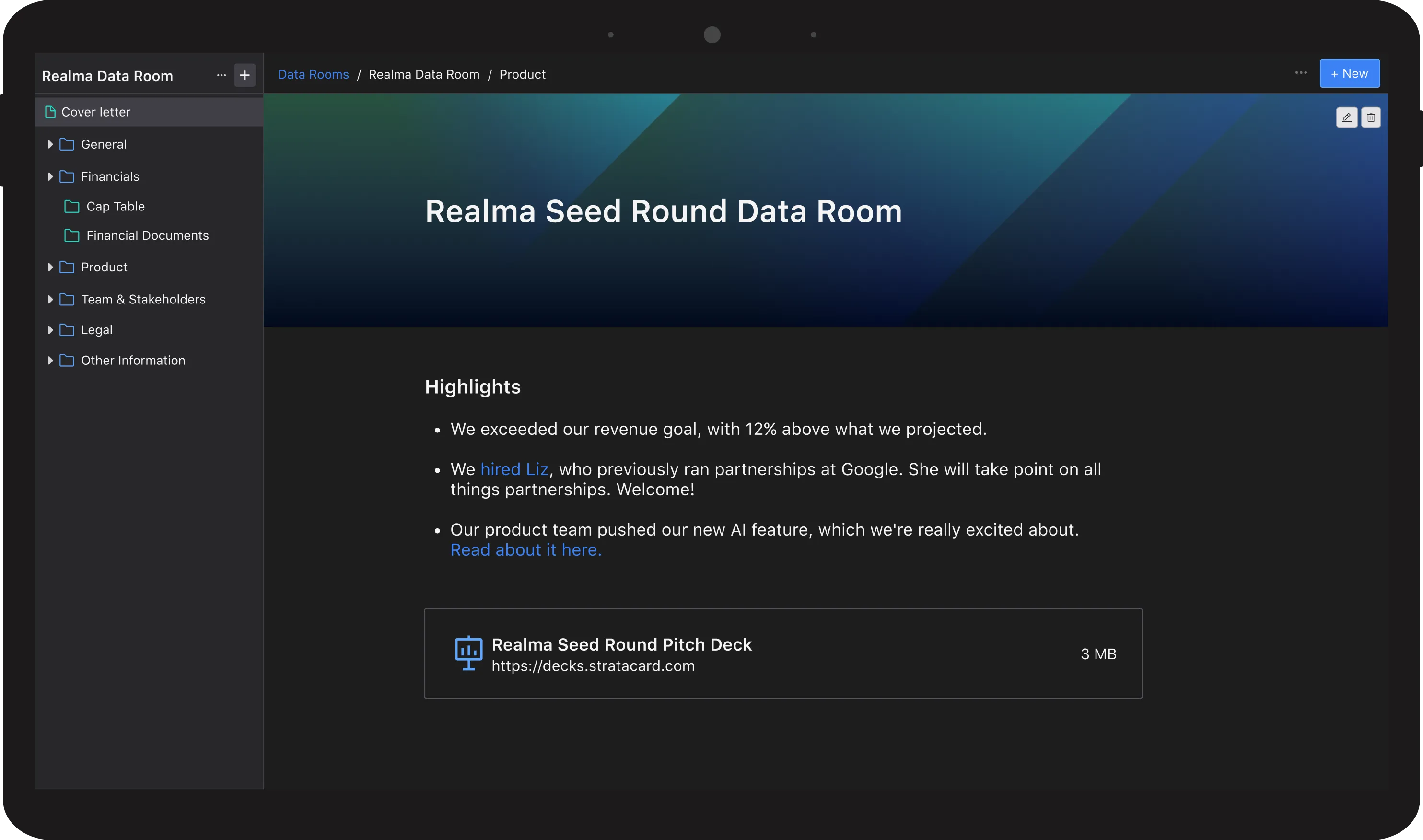
Preparing your startup data room early with a clear folder hierarchy for financial models and cap tables drastically accelerates the overall investor review process. Establishing granular access permissions before institutional due diligence begins ensures that deal momentum remains high and sensitive corporate data cannot be secretly downloaded.
When you are raising capital or navigating an acquisition, reliable virtual data room software is the difference between closing the deal and stalling in due diligence.
In 2026, the fundraising climate is heavily focused on operational hygiene. According to NVCA data, with the average Series A due diligence process now taking up to four weeks longer than it did in previous years, investors are scrutinizing unit economics and compliance more rigorously than ever. Scrambling to organize sensitive legal and financial documents in a standard consumer cloud folder is a massive red flag that can directly correlate to delayed or pulled term sheets. To maintain deal momentum and build immediate institutional trust, founders need a secure, purpose-built platform.
What is Virtual Data Room Software?
Virtual data room software is a highly secure, cloud-based platform used by startups to store and share sensitive corporate, financial, and legal documents during venture capital fundraising and M&A due diligence. It provides advanced security features like granular access controls, dynamic watermarking, and viewer analytics that standard cloud storage lacks.
During fundraising, they provide a secure way to share financials, cap tables, and corporate bylaws with investors. According to the IBM Cost of a Data Breach Report, with the average cost of a data breach for small-to-medium businesses exceeding $3 million, relying on consumer-grade file sharing for IP assignments, SAFE notes, and employee PII is an operational risk institutional investors simply will not accept.
Why VC-Backed Startups Need a Dedicated Data Room
For founders, raising capital involves managing investor conversations, fulfilling due diligence requests, and tracking document engagement. The best virtual data room software helps founders maintain deal momentum by allowing VCs to instantly access verified financial and legal data without endless email chains.
Whether you are securing initial capital or preparing for a Series B, top-tier venture capital firms like Sequoia and Andreessen Horowitz expect highly organized documentation as the absolute standard of care. Founders raising a pre-seed round should establish their data room architecture early to avoid scrambling for documents when a lead investor asks for them.
Beyond organization, a dedicated virtual data room provides a massive strategic advantage through investor engagement analytics. Consider a SaaS startup fielding M&A acquisition offers from two strategic buyers. By using a purpose-built virtual data room, the founders could assign granular permissions, track which buyer spent the most time reviewing the intellectual property portfolio, and use that real-time analytics data to negotiate a stronger term sheet.
5 Must-Have Features in the Best Virtual Data Room Software
When evaluating platforms to host your intellectual property and financial models, a basic cloud drive is insufficient. To survive rigorous institutional due diligence, the best virtual data room software must include these five non-negotiable features:
- Granular Access Controls (View-Only & No-Download): You must be able to restrict actions on a per-user or per-firm basis. Revoking access instantly or preventing the downloading and printing of critical IP assignments is mandatory.
- Dynamic Watermarking: Automatically overlay the reviewing investor's email address and IP address across sensitive documents to deter unauthorized forwarding or offline leaks.
- Viewer Analytics & Engagement Tracking: Go beyond basic read receipts. Elite operators use page-by-page engagement data to determine exactly which slide in the pitch deck a partner spent the most time analyzing.
- Native Q&A Workflows: Due diligence generates hundreds of micro-inquiries. Centralizing investor questions and founder responses directly alongside the target documents eliminates disorganized email chains and creates a verifiable audit trail.
- Enterprise-Grade Compliance: Institutional investors expect the software itself to pass a security audit. Ensure the platform holds current SOC 2 Type II and ISO 27001 certifications.
Virtual Data Room Pricing: How Much Should Startups Pay?
Founders budgeting for a capital raise need hard numbers, not vague estimates. While legacy software often relied on archaic per-page billing, modern SaaS platforms have standardized around predictable subscription tiers.
Based on 2026 industry benchmarks, here is what founders should expect to pay:
- Basic Founder Plans (Pre-Seed to Seed): Generally range from $15 to $50 per month, providing fundamental tracking and document security for a limited number of administrative users.
- Growth Stage & M&A Data Rooms (Series A+ and Exits): Enterprise-grade solutions scale rapidly, typically costing between $500 to $1,000+ per month, unlocking unlimited external guests, advanced analytics, and custom branding.
Per-User Pricing vs. Flat-Fee Models
Understanding the underlying billing mechanic is critical to protecting your burn rate during a prolonged raise.
- Per-User Pricing: Charges a set monthly fee for every internal seat and sometimes every external investor granted access. While the initial entry price is low, costs can compound rapidly during a highly syndicated Series A when dozens of analysts and partners require access.
- Flat-Fee Models: Charges a predictable, single monthly or annual rate regardless of how many venture capitalists you invite to the room. For startups actively pitching multiple term sheets or managing complex M&A due diligence, flat-fee pricing offers vastly superior unit economics.
Free vs. Paid: When to Upgrade Your Virtual Data Room
When searching for a free virtual data room, founders usually default to Google Drive or Dropbox. While this approach is perfectly acceptable for a lightweight Friends & Family round, institutional investors expect dedicated software. Relying on consumer-grade file sharing when attempting to close a multi-million dollar round signals a lack of operational maturity.
Knowing exactly when to transition from a free tool to a secure, paid solution is a critical upgrade trigger for founders. The rule of thumb in 2026: The moment you move from pre-seed into a priced Seed or Series A round, you must abandon consumer cloud storage.
| Feature | Free Cloud Storage (e.g., Google Drive) | Dedicated Virtual Data Room Software |
|---|---|---|
| Best For | Pre-Seed, Friends & Family Rounds | Seed, Series A+, M&A |
| Access Control | Basic (Link sharing, simple view/edit) | Advanced (View-only, time-expiring links) |
| Document Tracking | None / Very Limited | Comprehensive (Page-by-page analytics) |
| Watermarking | No | Yes (Dynamic user-specific watermarks) |
Top Virtual Data Room Providers for Startups in 2026
Evaluating virtual data room providers requires looking past feature lists to find the platform that aligns with your specific fundraising stage. While the market is flooded with options, the best data room providers fall into distinct categories, each serving a different operational need.
To determine the best data room for startups, founders should look at these three primary categories:
- Integrated Investor Relations Platforms (e.g., Visible): For startups actively raising Seed to Series B, an integrated platform is the ultimate lever. Visible seamlessly bridges the gap between your data room, your fundraising CRM, and your ongoing investor updates. By centralizing your core documents in the same ecosystem where you manage your investor pipeline, you maintain total control over the narrative and eliminate the friction of switching between siloed applications.
- Traditional Standalone Virtual Data Rooms: Built decades ago for corporate mergers, these legacy platforms often survive on old habits rather than modern usability. For agile startups raising Seed to Series B rounds, they are notoriously bloated—forcing founders to navigate clunky, outdated interfaces and pay exorbitant, unpredictable fees that drain valuable runway without adding strategic value to the fundraise.
- Consumer Cloud Storage (The "Free" Tier): As outlined above, tools like Google Drive are not true data rooms. They act as a temporary stopgap for pre-seed founders but lack the critical tracking, granular view-only permissions, and professional presentation required to survive institutional due diligence.
The Ultimate Investor Data Room Checklist
To survive investor due diligence, your virtual data room for startups must include the following core folders:
- Corporate Records: Articles of incorporation, bylaws, and board meeting minutes.
- Financials: Historical profit and loss statements, balance sheets, and pro forma models.
- Cap Table & Legal: Up-to-date capitalization table, SAFE notes, and founder agreements.
- Intellectual Property: Patents, trademarks, and open-source software licenses.
- Pitch Deck & Executive Summary: Your current startup pitch deck and historical monthly investor updates.
Next Steps: Setting Up Your Startup's Data Room
- Choose the best virtual data room software based on your funding stage and budget.
- Establish a clear folder hierarchy matching standard VC due diligence checklists.
- Upload and categorize your foundational documents, starting with corporate records and financials.
- Configure granular access permissions to ensure sensitive data cannot be downloaded or forwarded.
- Generate secure links to share with individual investors or M&A acquisition targets.
Frequently Asked Questions
Is Google Drive secure enough for investor due diligence?
No. While free cloud storage might work for a Friends and Family round, institutional investors require dedicated virtual data room software. Basic drives lack the granular access controls, view-only permissions, and dynamic watermarking necessary to protect your intellectual property and confidential corporate records from unauthorized sharing.
What is the best virtual data room software for early-stage startups?
The best data room for startups seamlessly integrates document storage directly with your investor relations and pipeline tools. Rather than using legacy standalone options, choosing an integrated platform allows founders to manage due diligence, track engagement analytics, and send updates from a single, secure ecosystem.
What documents should be in a seed-stage data room?
A seed-stage data room must contain core corporate records, historical profit and loss statements, an up-to-date capitalization table, IP assignments, founder agreements, and your current pitch deck. Keeping these core due diligence folders meticulously organized accelerates the review process and builds immediate trust with lead investors.
Who should have access to the startup data room?
Access must be strictly limited to lead investors, participating venture partners, and their legal counsel. Founders must utilize role-based, view-only permissions within their virtual data room to ensure sensitive documents, such as financial models and capitalization tables, cannot be downloaded or forwarded to unauthorized third parties.