
























Key Takeaways
- Accelerate Due Diligence: Selecting the right data room providers over generic cloud storage is critical for building immediate trust with institutional investors and removing friction from the audit process.
- Close Rounds Faster: Modern, technology-enabled virtual data rooms actively shorten fundraising timelines, helping startups close deals an average of 12 days faster than those using legacy platforms.
- Avoid Critical Risks: Free cloud drives signal operational immaturity and lack necessary security, while older M&A enterprise tools are too bloated, slow, and expensive for agile startup founders.
- Gain Strategic Leverage: Premium platforms like Visible merge secure document repositories with built-in fundraising CRMs, allowing you to manage your entire pipeline in one unified, professional portal.
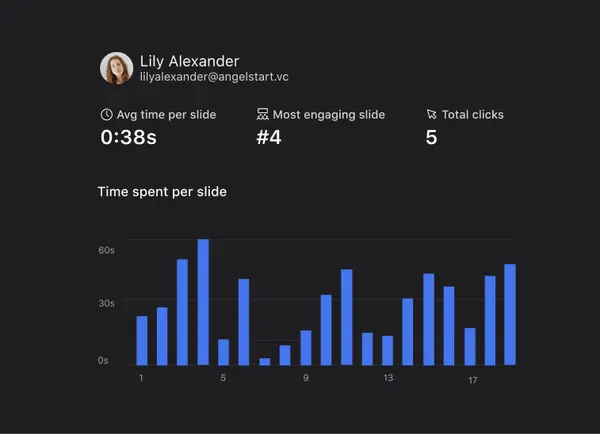
- Track Investor Intent: Real-time engagement analytics eliminate the guesswork by showing you exactly who is viewing your pitch deck and financial models, enabling highly targeted follow-ups.
An investor-ready data room accelerates due diligence and builds immediate trust. Choosing a dedicated platform over generic cloud storage eliminates friction, secures sensitive financials, and provides the behavioral analytics needed to close your round faster.
In 2026, evaluating the right data room providers is a strategic maneuver, not just an administrative IT decision. The software you choose can mean the difference between maintaining explosive deal momentum and losing a lead investor to a stalled, frustrating audit.
Institutional partners evaluate opportunities under increasingly tight timelines. Handing them a fragmented, poorly structured drive signals operational risk before they even open your cap table.
Tyler Mincey of Baukunst put the standard higher than tidiness in TechCrunch. "You have to help investors understand why you are right and how you reached your conclusions. You have to really bring people along and be a great communicator and storyteller." A folder structure is the first version of that argument an investor sees.
To survive a rigorous Series A or M&A diligence process, modern founders need a centralized, intelligent environment that securely houses sensitive materials and delivers actionable insights into investor engagement.
Top Data Room Providers Compared (2026)
In 2026, the software landscape is highly fragmented. Founders must navigate between lightweight link-sharing tools, archaic enterprise behemoths, and modern, integrated platforms. Here is how the top software categories break down for active operators managing high-stakes transactions.
Best for Early-Stage & Series A: Visible
When running a tight Series A process, your data room cannot be a static graveyard of PDFs. It must function as an active, strategic asset. Visible is engineered explicitly for agile founders, merging a secure document repository directly with your fundraising CRM and automated investor updates. Rather than blindly sharing access, operators can track pipeline momentum in real-time, monitor which venture partners are scrutinizing the financial models, and centralize the entire diligence workflow to close rounds with precision.
Secure Link-Sharing Tools
Single-document tracking links are highly effective for the top of the funnel, specifically, gating and tracking a standalone pitch deck to gauge interest before a first meeting. However, these are fundamentally document-sharing utilities, not robust repositories. When a lead investor issues a term sheet and moves into deep due diligence requiring historical P&L statements, cap tables, and HR compliance documents, basic link-sharing software lacks the comprehensive, multi-tiered folder infrastructure needed to execute a complex audit without friction.
Free Virtual Data Room Providers
At the pre-seed stage, bootstrapping with free virtual data room providers, such as standard consumer-grade cloud drives, is a functional band-aid. They are ubiquitous and cost-effective for sharing initial documents with early angel investors. However, as a startup scales toward institutional capital, relying on general-purpose cloud storage becomes a critical liability. These systems lack the granular role-based permissions, dynamic watermarking, and specialized audit logs required for Series A diligence, ultimately introducing unacceptable security risks and signaling operational immaturity to top-tier VC firms.
Legacy M&A Data Room Providers
Historically, heavy enterprise platforms served as the default m&a data room providers for massive, slow-moving corporate mergers. For modern startups, however, these legacy tools are archaic, bloated, and entirely misaligned with agile workflows. They force founders to navigate clunky, severely outdated interfaces and pay exorbitant fees for complex features built for investment bankers, not startup operators. They do not represent an "upgrade" to a more established system; they represent a bottleneck. Access is the exposure.
In Verizon's 2026 Data Breach Investigations Report, built on more than 31,000 security incidents across 145 countries, internal actors appeared in 12% of breaches, down from 18% the year before.
Free Virtual Data Room Providers vs. Premium Platforms
When bootstrapping a pre-seed round, leaning on a generic cloud drive is a common reflex. However, as you scale toward institutional investment, the limitations of free virtual data room providers quickly become a critical liability. To run a tight, professional fundraising process, founders must weigh the immediate cost savings of a generic drive against the massive strategic leverage a premium platform provides during rigorous due diligence.
Feature
Free Data Room Providers (e.g., Google Drive)
Premium Platforms (e.g., Visible)
Security & Access
Basic link sharing, broad folder permissions; high risk of accidental external forwarding.
Granular, role-based access, dynamic watermarking, complete audit logs, and instantly revocable permissions.
Branding
Generic consumer interface; no custom domains or startup-specific visual identity.
Fully white-labeled environments that project institutional-grade professionalism.
Analytics
None, or basic overall view counts; zero insight into specific investor behavior or intent.
Real-time engagement tracking on deck opens, specific document views, and exact time spent per page.
Investor Experience
Clunky folder navigation; disjointed email threads; requires manual follow-ups to gauge interest.
Seamless UI, integrated pipeline CRM, and a unified portal built specifically for venture capital workflows.
Core Features of the Best Data Room for Startups
Merely storing files in the cloud is no longer enough for an active fundraise. The best data room for startups goes beyond passive storage, actively accelerating your workflow and providing strategic leverage during negotiations. When evaluating platforms in 2026, demand modern infrastructure rather than bloated legacy features.
Must-Have Features:
- Built-In Investor CRM Integration: Connect your document sharing directly to your pipeline. Manage your funnel, track investor statuses, and log communications in a single, unified workflow without jumping between tabs.
- Real-Time Engagement Analytics: Eliminate the guessing game. Access granular insights to see exactly when an investor opens your pitch deck, which financial models they spend the most time scrutinizing, and whether they are sharing your materials internally with other partners.
- Automated Report Generation: Streamline ongoing investor relations by easily generating and distributing performance updates and KPI dashboards directly from your central repository.
- Granular Security Controls: Protect your intellectual property with role-based permissions, dynamic watermarking, comprehensive audit logs, and instantly revocable access—crucial capabilities when navigating multiple term sheets.
- Frictionless UI/UX: Investors evaluate hundreds of deals a year; they should never need a tutorial or a software plugin to access your metrics. The platform must offer drag-and-drop simplicity and intuitive navigation that respects a partner's time.
How to Set Up an Investor-Ready Data Room in 5 Steps
Building an investor-ready data room is like designing a masterclass on your company's value—every document must intentionally educate and persuade the evaluating partner. To capture the "How-To" Featured Snippet and ensure a frictionless diligence process, follow this systematic framework:
- Choose a platform purpose-built for venture capital. Ditch the generic cloud drives and select a dedicated VDR that integrates natively with your pipeline CRM and provides real-time engagement analytics.
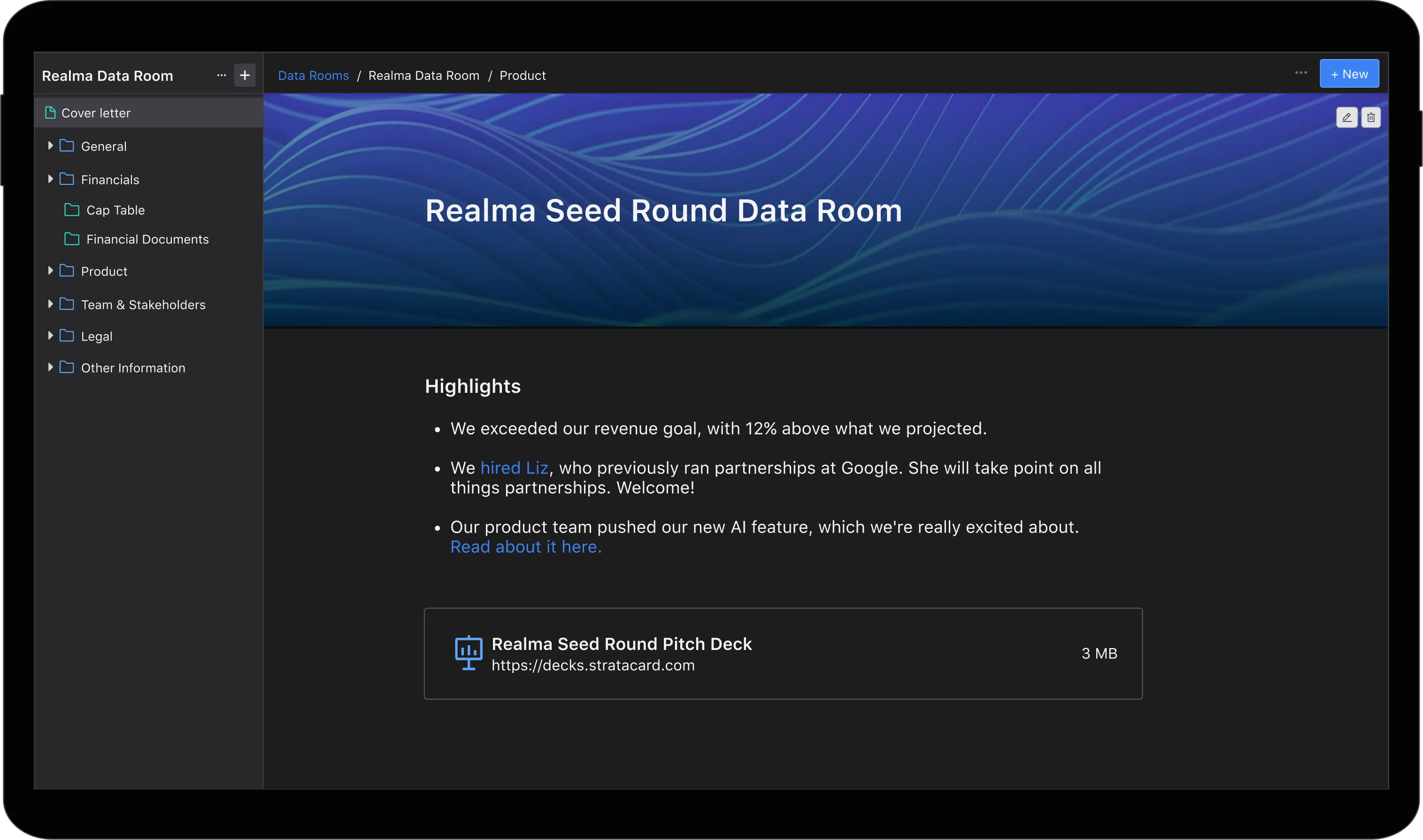
- Structure your folders intuitively. Create clear, top-level directories for Financials, Legal, HR, and Product to remove friction during a rigorous institutional audit.
- Upload your core narrative and foundational documentation. Include your latest pitch deck, historical P&L statements, and a fully updated cap table to proactively answer complex partner questions.
- Set strict, role-based permissions. Protect your intellectual property by ensuring you can restrict document downloads, apply dynamic watermarks, and revoke access instantly once a term sheet is signed.
- Track engagement analytics daily. Monitor exactly which venture partners are actively reviewing your materials to identify high-intent investors and prioritize your strategic follow-ups.
What is a Virtual Data Room (VDR)?
A virtual data room (VDR) is a secure cloud repository used by startups to store, manage, and share sensitive business documents during high-stakes transactions like venture capital fundraising and M&A. It ensures controlled access, tracking, and compliance, protecting confidential data.
Frequently Asked Questions
Why should startups use dedicated data room providers instead of generic cloud storage?
Generic cloud drives lack the granular security and professional polish required by institutional investors. Dedicated data room providers offer role-based permissions, dynamic watermarking, and real-time engagement analytics. This ensures your sensitive financial documents remain secure while signaling operational maturity to venture capital partners.
Are free virtual data room providers safe for venture capital fundraising?
While bootstrapping with free virtual data room providers works well for pre-seed angel rounds, it becomes a major liability during institutional due diligence. They lack specialized audit logs, custom branding, and instant access revocation, which introduces unacceptable security risks and friction into your fundraising process.
What core features should founders demand from modern data room providers?
The best data room providers offer much more than passive file storage. Founders should prioritize platforms that include built-in investor CRM integrations, real-time document engagement analytics, dynamic watermarking, and a frictionless user interface. These targeted tools transform your repository into an active asset that accelerates deal momentum.
When should a startup transition to a premium data room provider?
Founders should upgrade to a premium platform right before launching a Series A or entering deep due diligence. As soon as you begin sharing highly sensitive intellectual property, historical P&L statements, or complex cap tables, specialized data room providers become absolutely essential for protecting assets and tracking investor intent.
How do top data room providers help close funding rounds faster?
Modern data room providers eliminate diligence friction by giving investors an intuitive, highly structured repository. Instead of navigating disorganized folders or legacy interfaces, partners can quickly review materials. Combined with analytics that highlight high-intent investors, founders can easily prioritize follow-ups and negotiate deals more efficiently.