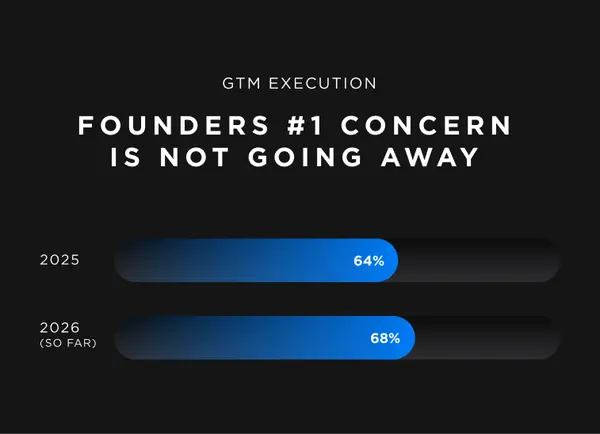

Ask founders what kept them up at night two years ago, and AI strategy barely made the list. Last year, it jumped to 23%. This year, early responses to the Startup Benchmarks Report show it climbing to 32% so far, trailing only go-to-market execution as founders' top concern.
That's a fast rise for a single category. But the more interesting story isn't that founders are worried about AI. It's what, specifically, they're worried about.
The Gap Between Building AI and Profiting From It
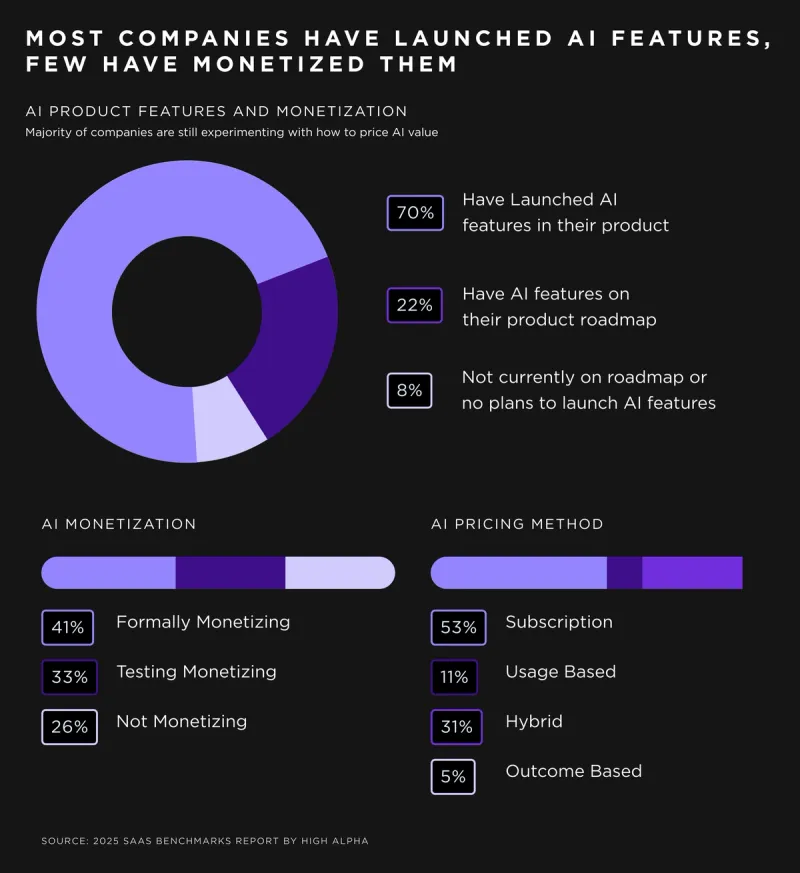
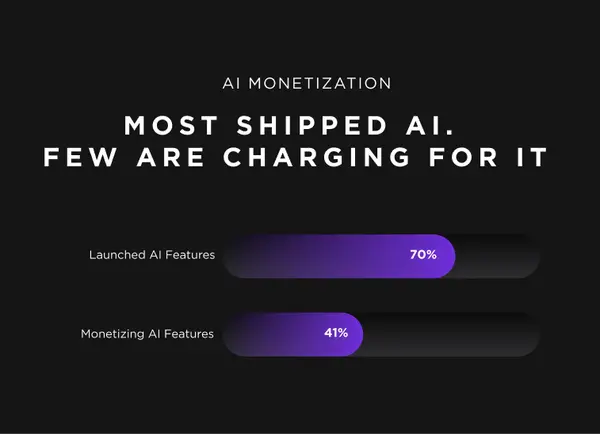
Last year, 70% of companies had already launched AI features in their product. Only 41% were actually making money from them.
That's a 29-point gap between shipping and monetizing. Most companies weren't stuck on the technical problem. They'd already solved that. They were stuck on the business problem: how do you price something when the value it creates doesn't look like the value your existing product creates?
The data pointed to an answer, even if most companies hadn't acted on it yet. Companies using outcome-based and hybrid pricing models were seeing meaningfully faster growth and stronger retention than companies that had simply bolted AI features onto their existing subscription tiers. The market was already telling founders how to price AI. Most just hadn't caught up yet.
What This Year's Data Adds
This year's survey doesn't ask the launched-versus-monetized question the same way, so we can't say definitively whether that exact gap has closed. But a few related signals are worth watching.
Non-subscription pricing models, meaning consumption-based, outcome-based, and hybrid structures, are now used by 54% of companies, up from 47% last year. Plain subscription pricing, once the default for nearly every SaaS company regardless of what was inside the product, is losing ground.
At the same time, the share of companies calling AI core to their product, not just a supporting feature, has grown from 36% to 40% so far this year. More companies are betting the whole product on AI rather than treating it as an add-on, which raises the stakes on getting the pricing question right.
There's a second layer to the anxiety showing up in this year's data too: 85% of founders say their market carries at least some vulnerability to disruption from AI-native competitors. It's not just "are we monetizing our AI features correctly." It's "is there a leaner, AI-native competitor who doesn't need our legacy pricing model, our legacy team structure, or our legacy assumptions about what this product should cost."
Why This Is Worth Tracking Closely
Two years ago, the question was whether to build with AI at all. That question is settled. Nearly everyone has answered yes.
This year's question is harder, and it's the one keeping founders up at night: now that everyone has AI in the product, what actually separates the companies that turn it into durable growth from the ones that just added a feature nobody wants to pay extra for.
The Startup Benchmarks Report exists to help answer exactly that kind of question with real data instead of guesswork. It's the longest-running and largest self-reported benchmarks dataset for startups, and it only works because founders like you take the time to contribute.
If you want to see how your own AI monetization, pricing model, and product strategy compare to real peer data, take the survey below. You'll get the full results early, ahead of the public release.