











Key Takeaways
-
Learn how specialized systems integrate VC data to build a modern VC stack, replacing scattered spreadsheets with one efficient ecosystem.
-
Discover the must-have features, secure deal rooms, portfolio dashboards, accounting integrations, and custom reporting that keep VC teams organized and investor-ready.
-
See how unified tools simplify fund operations, from capital call reconciliation to KPI tracking, while supporting clean data and strong security practices.
-
Explore best practices for implementation, including pilot projects, training, and standardized workflows to ensure a smooth rollout.
-
Understand how a flexible VC tech stack scales from seed stage to growth funds, adapting to new portfolio needs and reporting requirements over time.
As a General Partner, Principal, or VC Associate, your time and your network are your most valuable assets. Modern venture capitalists cannot rely on scattered spreadsheets to manage their pipeline while competing for top-tier deals. Founders and investors need a clear, actionable path from sourcing early-stage opportunities to closing rounds. For modern funds, implementing the right venture capital deal-flow software is the difference between missing out on a competitive round and securing an allocation.
What is Venture Capital Deal Flow Software? (The Modern VC CRM)
Venture capital deal flow software is a specialized relationship management platform designed for venture capital investors to source startups, track due diligence, and manage investment pipelines. Unlike traditional sales CRMs, it handles complex relationship networks, funding round data, and integrates seamlessly with post-investment portfolio management tools.
Why Generic CRMs Fail Venture Capitalists
Traditional B2B sales CRMs do not work for venture capital. VCs track dynamic, multi-party networks, such as founders, co-investors, and LPs, not linear sales funnels. This fundamental difference in workflow perfectly justifies the need for a dedicated CRM for venture capital.
With over 5,000 seed-stage rounds occurring annually, early-stage funds are reviewing thousands of pitches a year. A standard sales CRM simply isn't built to parse the complex relationship web of co-investors, founders, and syndicates required to execute a modern venture deal.
Core Features of the Best Venture Capital Software
The most effective platforms share core capabilities that streamline 2026 VC workflows.
- Automated Data Enrichment: Instantly pull founder and company data. This keeps your pipeline records accurate without manual entry.
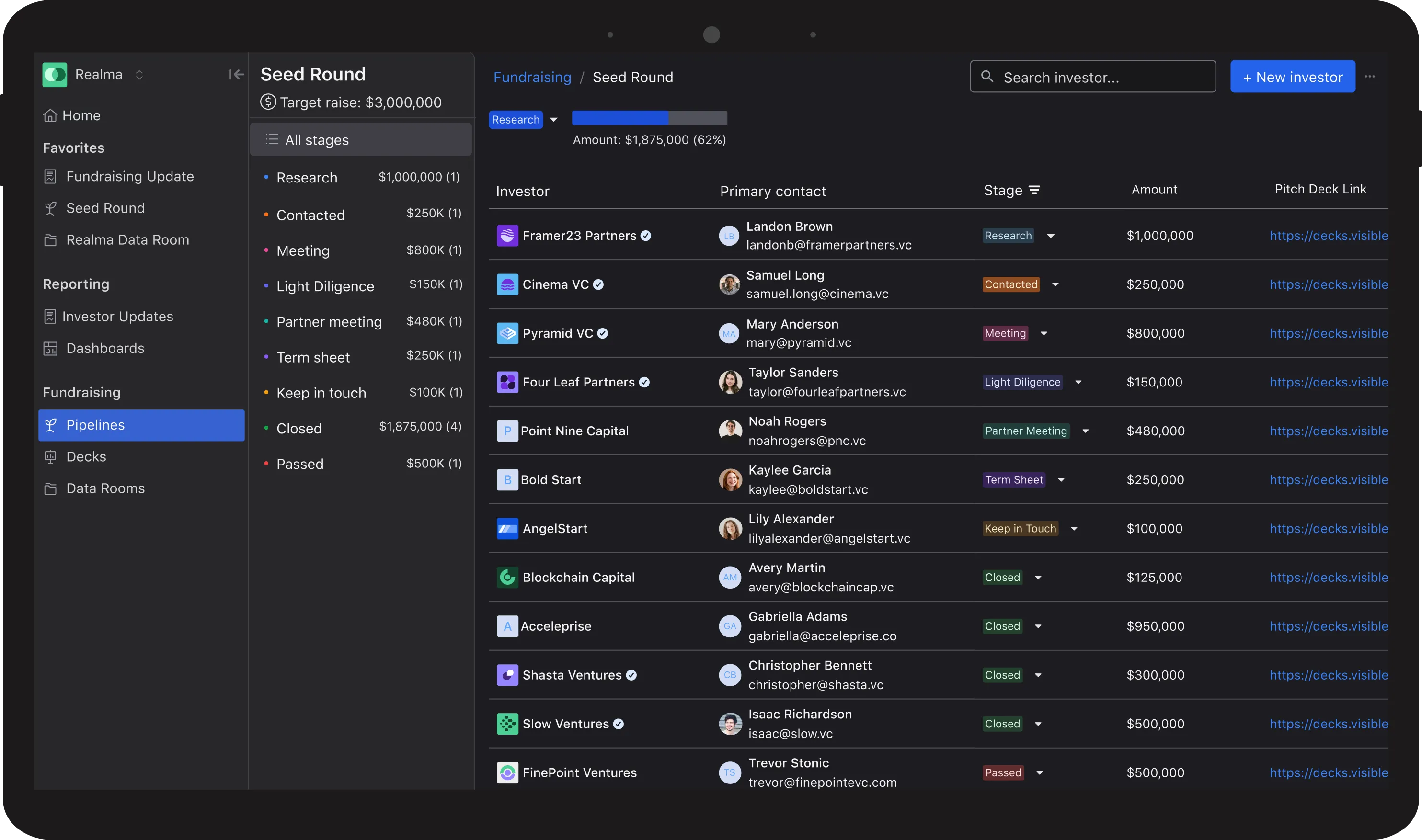
- Kanban Pipeline Tracking: Visualize deals from first meeting to term sheet.
- LP Update Integration: Seamlessly push pipeline metrics to investor reports.
- Cap Table Integration: Track ownership stakes post-investment.
How to Evaluate a CRM for Venture Capital (Build vs. Buy)
When choosing how to manage your pipeline, evaluating a CRM for venture capital comes down to assessing data privacy, ease of use, and LP reporting. The ideal solution combines pre-investment deal flow tracking with post-investment portfolio management, ensuring you have a complete view of your firm's performance.
Here is how standard manual methods stack up against dedicated platforms:
| Criteria | Traditional Spreadsheets | Purpose-Built VC CRM |
|---|---|---|
| Data Entry | Highly manual, prone to human error, and quickly outdated. | Automated data enrichment and direct email/calendar syncing. |
| Team Collaboration | Siloed files with frequent version control issues. | Real-time pipeline tracking and centralized firm-wide communication. |
| LP Reporting | Requires hours of manual data extraction and formatting. | Seamless generation of pipeline metrics and investor updates. |
| Security | Basic password protection; highly vulnerable to accidental sharing. | Role-based access, strict data privacy, and audit trails. |
Getting Started: The Best Venture Capital Deal Flow Software Free Tiers
It is common for emerging managers to start by downloading a VC fund pitch deck PDF or a pipeline spreadsheet template to track early opportunities. However, as deal volume increases, most teams will outgrow these manual methods by Fund II.
Fortunately, budget-conscious teams do not have to rely on spreadsheets forever. The best venture capital deal flow software free tiers (like Visible's starter plan) enable a seamless transition from manual tracking to an automated VC CRM. This ensures you can establish proper pipeline hygiene from day one without overcommitting your initial operating budget.
How to Build the Ultimate VC Stack Around Your Dealflow CRM
Whether you are deploying early capital from Rolling Funds or writing checks for Pre-Seed startups, your system's focus must remain purely on investor data. A modern dealflow crm sits at the center of the VC stack, acting as the single source of truth for your firm's relationships and opportunities.
By building your workflow around this central hub, you can seamlessly integrate with cap table software to track ownership, accounting tools for fund administration, and external VC market map data providers, like Crunchbase, to enrich your deal records automatically. This interconnected approach eliminates data silos and ensures your team is always operating with the most accurate, up-to-date intelligence.
Tracking VC Investment by Sector & Analyzing VC Markets
Modern deal flow tools allow investors to easily tag and filter their pipeline by industry, helping them analyze their own VC investment by sector against broader VC market trends. This granular level of tracking is essential for identifying macro shifts, evaluating Series A opportunities, and ensuring your fund's strategy aligns with actual market momentum.
With global venture funding rebounding to over $425 billion in 2025, driven heavily by massive allocations into AI and infrastructure, tracking VC investment by sector has never been more critical for asset allocators.
Connecting Pipeline Data to VC Portfolio Management Software
The investment lifecycle does not end when the term sheet is signed. To maintain accurate records, it is vital to connect the pre-investment pipeline directly to your post-investment tracking.
The median time to IPO for tech companies valued at $500 million or more has stretched to over 11 years. Because startups are staying private longer, VCs require robust VC portfolio management software to track asset performance over a decade-plus lifecycle.
By pushing your initial sourcing data straight into your VC portfolio management software, you eliminate redundant data entry and establish a continuous timeline for every asset. This unified approach makes it vastly easier to calculate and report on crucial LP metrics like TVPI, IRR, DPI, and MOIC as your portfolio matures.
Using VC Data to Enhance Your VC Fund Pitch Deck (PDF Exports)
To successfully raise capital, General Partners must prove their sourcing prowess to LPs. A robust system allows you to effortlessly pull and export your pipeline data to showcase your firm's proprietary access. By seamlessly integrating real-time VC data into your VC fund pitch deck PDF, you provide LPs with concrete, visual evidence of your deal velocity, conversion rates, and overall pipeline health.
Safeguarding VC Startup Data and Pipeline Hygiene
A major pain point for growing funds is dealing with messy, inconsistent CRM records. Safeguarding your pipeline hygiene is critical to ensuring your metrics remain accurate and actionable. When evaluating a new VC startup, standardizing how their information is captured prevents duplicated entries, stale deals, and lost context. Clean data not only improves your team's day-to-day efficiency but also ensures that sensitive company financials and term sheets are properly secured with the right access controls.
Automating Venture Capital Industry Reports and LP Updates
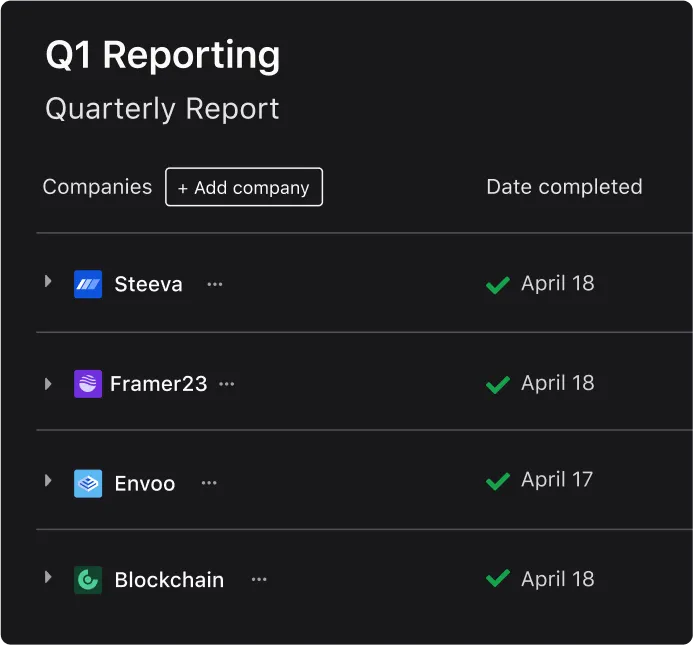
Proactive LP communication is a core use case for any modern pipeline platform. Instead of spending days manually compiling data across different tools, automated deal flow systems allow you to generate comprehensive updates with just a few clicks. By connecting your real-time pipeline and portfolio metrics directly to your reporting suite, you can easily produce a polished venture capital industry report. This automation gives your team time back to focus on strategic investing while keeping your LPs consistently informed.
5 Steps to Implement a New Deal Flow System Without Losing Velocity
- Audit existing spreadsheets: Clean your current VC data before migration.
- Map the deal pipeline: Define your firm's exact stages (e.g., Sourcing, Partner Pitch, Term Sheet).
- Integrate core tools: Connect your email, calendar, and VC portfolio management software.
- Run a pilot program: Test the workflow with one partner and associate first.
Standardize data entry: Create required fields to ensure clean reporting for your venture capital industry report.
Frequently Asked Questions
What is the best CRM for venture capital?
The best solution is a purpose-built VC CRM that connects your pre-investment pipeline directly with your post-investment LP reporting. Unlike standard sales tools, a dedicated platform ensures you can manage complex founder relationships and seamlessly push that data to investor updates.
How do venture capitalists track their deal flow?
While early-stage teams sometimes start with manual methods, modern venture capitalists track their deal flow by moving from spreadsheets to automated deal flow software. This allows teams to efficiently track inbound pitches, manage due diligence pipelines, and analyze broader VC markets without losing data in siloed files.
Can I get venture capital deal flow software free?
Yes, many platforms offer free starter tiers tailored for emerging managers. These options allow new funds to track initial deal flow, build good data habits, and manage their early pipeline before eventually scaling up to a full VC stack.
How does venture capital deal flow software scale as a fund grows?
A flexible platform expands from early seed investments to managing larger, multi-stage portfolios without requiring a major system overhaul. As your fund size and complexity increase, your team can seamlessly add new users, automate more complex LP reporting, and deepen integrations with your broader VC stack.
What metrics should investors track with a dealflow CRM?
Essential pipeline metrics include deal volume by sector, conversion rates across stages, and the time it takes to move from introduction to term sheet. Once a deal is closed, a modern platform links this initial sourcing data to post-investment portfolio KPIs like TVPI, IRR, and DPI.
How does VC fund software integrate with accounting and portfolio tools?
Modern deal flow platforms act as the central hub of your operations, connecting directly to cap table software and accounting systems via open APIs or native integrations. This connectivity automates capital call reconciliation, streamlines performance tracking, and ensures your pre-investment pipeline perfectly aligns with your post-investment VC portfolio management software.