


Key Takeaways
-
Use this guide to choose the right startup incubator based on what actually moves the needle for early-stage founders: hands-on mentorship, customer access, founder community, and clear outcomes, not hype.
-
Explore a curated list of top incubator programs across major startup ecosystems, including Silicon Valley, Austin, Chicago, Massachusetts, Toronto, Vancouver, and the UK, so you can shortlist options by location and network strength.
-
Compare programs using real signals like alumni scale and founder throughput, featuring incubators that have supported thousands of entrepreneurs and launched 100+ companies.
-
Find incubators that match your industry and goals, including specialized support for cleantech startups and women founders, alongside broad-based startup incubators with global reach.
-
Walk away with a practical checklist for applying, evaluating fit, and maximizing the incubator experience, so you can turn an incubator program into faster traction, stronger investor readiness, and a more efficient fundraising path.
Navigating the early stages of a startup can be challenging, and finding the right support can make all the difference. In this article, we’ll explore when your startup should consider joining an incubator, how to choose the one that best suits your needs, and highlight the top 10 incubators. From industry-specific guidance to critical funding opportunities, these incubators offer the resources, mentorship, and connections to help your startup thrive.
Related resource: The Top 16 Accelerators Powering Startup Growth
When Should a Startup Consider an Incubator?
A startup should consider joining an incubator when it has a solid idea or prototype but lacks the resources, guidance, and network to move forward. Incubators are particularly beneficial in the early stages of a startup, when founders may need help refining their business model, validating product-market fit, or securing initial funding.
Startups struggling to gain traction or needing industry-specific expertise and mentorship can significantly benefit from an incubator. Additionally, an incubator can provide the necessary resources and connections to accelerate progress if a startup prepares to scale but requires additional support to navigate growth challenges.
Top 10 Incubators for Startups
These incubators have been selected based on their strong industry focus, excellent mentorship programs, robust funding opportunities, and state-of-the-art resources and facilities.
1. IdeaLab

Overview: IdeaLab, founded in 1996 by entrepreneur Bill Gross, is one of the most renowned startup incubators in the world. Located in Pasadena, California, IdeaLab has a long history of fostering innovation and has played a pivotal role in launching over 150 companies, including well-known successes like eSolar and Picasa. The incubator provides startups access to a wealth of resources, including funding, expert mentorship, and a robust network of industry contacts.
Why Consider It: Startups should consider IdeaLab for its proven track record of turning innovative ideas into successful companies. With decades of experience, IdeaLab offers a supportive environment where entrepreneurs can develop and refine their business ideas. The incubator is particularly strong in the technology sector, but it also supports ventures in clean energy and other innovative industries.
Best For: IdeaLab is best suited for tech startups and those in innovative sectors such as clean energy. It’s ideal for founders with a strong, innovative concept who need access to experienced mentors, a supportive community, and the financial backing to bring their ideas to market.
2. CodeBase

Overview: CodeBase is the UK's largest technology incubator, with a strong presence in several cities across the country. Since its founding in 2014, CodeBase has focused on supporting startups in the tech industry by providing affordable coworking spaces, access to high-speed internet, and a vibrant community of like-minded entrepreneurs. It also offers various mentorship programs and educational events to help startups grow and succeed.
Why Consider It: Startups should consider CodeBase for its comprehensive support system that goes beyond just providing office space. The incubator’s extensive network of mentors and industry experts, combined with its presence in multiple tech hubs across the UK, makes it an ideal environment for tech startups looking to scale. CodeBase’s commitment to fostering a collaborative community also means that startups can benefit from peer support and potential partnerships within the incubator.
Best For: CodeBase is best suited for tech startups in the UK that are seeking an affordable and supportive environment to grow their business. It is particularly ideal for early-stage companies that would benefit from being part of a large, dynamic community of tech entrepreneurs.
3. LaunchAcademy

Overview: LaunchAcademy, located in Vancouver, Canada, is a leading startup incubator that has supported over 6,000 entrepreneurs since its inception in 2012. Specializing in technology sectors such as AI, big data, and software development, LaunchAcademy offers a robust support system that includes mentorship, access to an international network of investors, and regular networking events.
Why Consider It: Startups should consider LaunchAcademy for its strong track record of helping early-stage companies grow and succeed. The incubator’s focus on technology-driven startups makes it an ideal environment for companies looking to leverage AI and big data. Additionally, LaunchAcademy provides startups with the tools and resources needed to scale, including connections to key investors and global markets.
Best For: LaunchAcademy is best suited for tech startups, particularly those in AI, big data, and software, that are seeking comprehensive support to accelerate their growth. It’s especially valuable for entrepreneurs who want to connect with a global network and gain access to international markets.
4. DMZ
Overview: DMZ, based at Toronto Metropolitan University, is one of the world’s leading tech incubators. Since its launch in 2010, DMZ has been dedicated to helping high-potential startups scale their businesses through access to top-tier mentors, investors, and a global network. The incubator offers various programs tailored to different stages of a startup’s journey, from validation to growth, making it a versatile choice for tech entrepreneurs.
Why Consider It: Startups should consider DMZ for its strong emphasis on scaling and international expansion. The incubator provides access to a robust network of investors and industry experts, which is invaluable for startups looking to grow quickly. DMZ’s hands-on approach and focus on real-world results have helped numerous companies secure funding, enter new markets, and achieve significant milestones.
Best For: DMZ is best suited for tech startups that are beyond the initial idea stage and are ready to scale. It’s particularly ideal for entrepreneurs looking to expand internationally and those seeking strong mentorship and investor connections in the tech sector.
5. Tech Ranch

Overview: Tech Ranch, located in Austin, Texas, is a renowned startup incubator known for its supportive community and comprehensive programs that cater to entrepreneurs at various stages of their journey. Tech Ranch focuses on fostering connections between startups and mentors, providing essential business development resources, and offering workshops and events that help startups refine their strategies and scale effectively.
Why Consider It: Startups should consider Tech Ranch for its deep commitment to building entrepreneurial ecosystems. The incubator provides valuable networking opportunities and tailored support to help startups overcome challenges and accelerate their growth. Its programs are designed to guide entrepreneurs through the complexities of launching and scaling a business, making it an excellent choice for startups looking for a holistic support system.
Best For: Tech Ranch is best suited for early to mid-stage startups in sectors such as technology, business services, and automotive technology. It is particularly beneficial for entrepreneurs who are seeking a nurturing environment that emphasizes community-building and collaboration.
6. 500 Global

Overview: 500 Startups is one of the most prominent and globally recognized startup incubators and accelerators, headquartered in Silicon Valley. Since its founding in 2010, 500 Startups has supported thousands of startups worldwide through its intensive programs, which focus on product development, customer acquisition, and fundraising. The incubator has a vast network of mentors, investors, and alumni, making it a powerhouse for startups looking to grow and scale.
Why Consider It: Startups should consider 500 Startups for its extensive global reach and comprehensive support system. The incubator provides a wealth of resources, including access to a diverse network of mentors who are experienced entrepreneurs and industry experts. Additionally, 500 Startups is known for its strong emphasis on helping startups secure funding, with many graduates successfully raising capital through the program's Demo Days and investor connections.
Best For: 500 Startups is best suited for tech startups and entrepreneurs looking for a rigorous, fast-paced program that offers access to a global network of investors and mentors. It’s particularly ideal for startups that are ready to scale and require significant funding to reach the next level.
7. LACI - Los Angeles Cleantech Incubator
Overview: The Los Angeles Cleantech Incubator (LACI) is a leading incubator focused on supporting startups in the clean technology and sustainability sectors. Founded in 2011 and based in Los Angeles, LACI is dedicated to accelerating the commercialization of clean technologies that positively impact the environment. The incubator provides startups with access to state-of-the-art facilities, including prototyping labs, office spaces, and a microgrid testing center. LACI also offers comprehensive programs that include mentorship, networking opportunities, and funding support.
Why Consider It: Startups should consider LACI for its specialized focus on cleantech and sustainability, offering tailored resources that are difficult to find in general incubators. LACI’s strong connections with government agencies, utilities, and industry leaders provide startups with unique opportunities for partnerships and pilot projects. Additionally, LACI’s commitment to addressing climate change and creating green jobs makes it an ideal incubator for startups that prioritize environmental impact.
Best For: LACI is best suited for startups in the clean technology, renewable energy, and sustainability sectors. It is particularly valuable for entrepreneurs who are developing technologies aimed at reducing carbon emissions, improving energy efficiency, or addressing other environmental challenges.
8. WorcLab
Overview: WorcLab, based in Worcester, Massachusetts, is a dynamic incubator focused on fostering innovation and supporting startups across various industries. Known for its collaborative environment, WorcLab offers a range of resources including office spaces, mentoring, and networking opportunities. The incubator is designed to help startups at different stages of development, providing them with the tools they need to grow and succeed.
Why Consider It: Startups should consider WorcLab for its strong emphasis on collaboration and community. The incubator provides access to a network of entrepreneurs, industry experts, and investors, which can be invaluable for startups looking to build connections and scale their operations. Additionally, WorcLab offers tailored support programs that can help startups refine their business models, develop their products, and enter new markets.
Best For: WorcLab is best suited for early-stage startups across various industries that are looking for a supportive and resource-rich environment to accelerate their growth. It is particularly ideal for entrepreneurs who value collaboration and are seeking a community-oriented incubator that provides both physical resources and strategic guidance.
9. Halo Incubator

Overview: Halo Incubator, located in Silicon Valley, is a unique incubator that focuses on empowering female founders in the tech industry. Founded to address the gender gap in entrepreneurship, Halo Incubator provides a supportive environment where women-led startups can thrive. The incubator offers a range of resources, including mentorship from experienced female entrepreneurs, access to funding, and opportunities to network with investors and industry experts who are passionate about supporting women in tech.
Why Consider It: Startups should consider Halo Incubator for its specialized support tailored to the needs of female entrepreneurs. The incubator’s strong focus on gender equity ensures that women founders receive the mentorship, resources, and visibility they need to overcome the challenges often faced in the tech industry. Halo Incubator’s network of investors and partners is particularly geared toward supporting women-led startups, making it an excellent choice for female founders looking to scale their businesses in a supportive and empowering environment.
Best For: Halo Incubator is best suited for female tech founders who are looking for a community that understands the unique challenges of being a woman in the tech industry. It is ideal for startups in the early to mid-stages of development that are seeking mentorship, funding, and networking opportunities tailored to women entrepreneurs.
10. TechNexus

Overview: Tech Nexus, based in Chicago, Illinois, is a hybrid incubator and venture collaborative that bridges the gap between startups and established corporations. Founded in 2007, Tech Nexus offers a unique model that not only supports early-stage startups but also facilitates innovation within larger companies by connecting them with emerging technologies. The incubator provides access to corporate partners, mentorship, and capital, making it a powerful platform for startups looking to scale and integrate with industry giants.
Why Consider It: Startups should consider Tech Nexus for its strong focus on corporate collaboration and innovation. The incubator's model allows startups to tap into resources and networks that are typically accessible only to larger corporations. This includes opportunities to work directly with corporate partners on pilot projects, which can lead to strategic investments, partnerships, or even acquisition. Tech Nexus also provides access to venture capital and a network of seasoned mentors who can help guide startups through the complexities of scaling and entering new markets.
Best For: Tech Nexus is best suited for tech startups that are developing solutions relevant to large enterprises and are looking for opportunities to collaborate with corporate partners. It’s ideal for startups that are ready to scale and need the support and resources that come with integrating into established industry ecosystems.
Related resource: 10+ VCs & Accelerators Investing in Underrepresented Founders
How to Choose the Right Startup Incubator
Choosing the right startup incubator is a crucial decision that can significantly influence your venture's success. With numerous options available, it’s essential to carefully evaluate each incubator to find the one that aligns with your specific needs and goals.
In the following sections, we’ll outline the key criteria for selecting an incubator, including industry focus, location, mentorship quality, funding opportunities, and the resources they offer. By understanding these factors, you can make an informed choice that supports your startup’s growth and long-term success.
Related resource: 10 Essential Startup Conferences for Fall 2024
Industry Focus
Choosing an incubator specializing in your industry or sector can be a game-changer for your startup. Industry-focused incubators bring a wealth of relevant expertise, tailored resources, and established networks that directly apply to your business. These incubators understand your sector's unique challenges and opportunities, allowing them to provide more targeted mentorship and support.
For example, a tech-focused incubator will have mentors experienced in technology startups, access to tech-specific resources, and connections to investors interested in tech ventures. This specialized support can significantly accelerate your startup's growth by helping you navigate industry-specific regulations, access niche markets, and connect with potential partners and customers.
Related resource: Accelerator vs. Incubator: Key Differences and Choosing the Best Fit for Your Startup
Location
The location of an incubator plays a critical role in a startup's success, as it can directly influence access to customers, investors, and partners. Being in close proximity to your target market allows you to better understand customer needs, conduct market research, and iterate on your product based on real feedback.
An incubator located in a thriving startup ecosystem, such as Silicon Valley or Austin, provides unparalleled access to a network of investors and industry leaders who can offer funding, mentorship, and strategic partnerships.
Being near key partners and suppliers can streamline operations, reduce costs, and improve collaboration. Choosing an incubator with a strategic location can give your startup a significant advantage in scaling effectively.
Related resource: The Top Emerging Tech Hubs Across the United States
Mentorship and Expertise
Evaluating the quality and experience of the mentors and advisors associated with an incubator is crucial for your startup's success. High-quality mentors bring a wealth of industry knowledge, practical experience, and a network of contacts that can be invaluable as you navigate the challenges of building and scaling your business.
Experienced mentors can provide actionable insights, help you avoid common pitfalls, and guide you in making strategic decisions that can accelerate growth. They also offer personalized advice tailored to your needs, often more impactful than generic guidance.
Well-connected mentors can introduce you to potential investors, partners, and customers, opening doors that might otherwise be difficult to access. Therefore, when choosing an incubator, ensure its mentorship network aligns with your industry and business goals.
Related resource: 12 Online Startup Communities for Founders
Funding Opportunities
Access to capital is often a critical factor in a startup's growth and sustainability, making it essential to consider whether an incubator offers funding or has strong connections to venture capitalists and angel investors.
Some incubators provide startups with direct funding through seed investments or grants, which can be a significant boost in the early stages.
Incubators with robust networks of VCs and angel investors can facilitate introductions and help you secure the capital needed to scale your business. These connections are invaluable, as they not only provide financial support but also come with strategic advice and industry insights from experienced investors.
When selecting an incubator, it is essential to evaluate its funding mechanisms and the strength of its investor network to ensure alignment with your startup's financial needs.
Related resource: Seed Funding for Startups: Our Complete Guide
Resources and Facilities
When evaluating a startup incubator, it's crucial to assess the resources, facilities, and infrastructure it offers. These elements can significantly impact your startup’s operations and growth. Incubators typically provide shared office space, high-speed internet, conference rooms, and, in some cases, specialized equipment, which can be costly to procure independently. Access to such facilities reduces overhead costs and fosters a collaborative environment where startups can share ideas and resources.
An incubator's infrastructure often includes access to essential business services, such as legal advice, accounting, and marketing support, which can be critical for early-stage startups that may lack these in-house capabilities.
Some incubators offer advanced technology labs or prototype development spaces, which are particularly beneficial for startups in the biotech, hardware, or manufacturing sectors.
The quality of these resources and facilities can significantly impact your startup’s ability to innovate and scale efficiently. Therefore, when choosing an incubator, it’s essential to ensure its infrastructure aligns with your startup's specific needs and provides an environment conducive to productivity and growth.
Find Incubators and Investors with Visible's Connect Database
Choosing the right incubator is a pivotal decision that can shape the future of your startup. From industry focus and location to mentorship quality and funding opportunities, these factors are critical in determining which incubator will best support your growth.
As you prepare for your startup’s next steps, ensure you stay connected with potential investors using Visible.
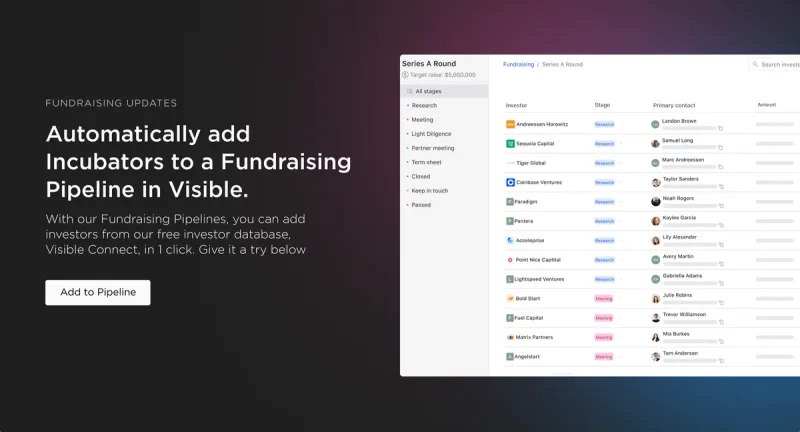
- Find investors at the top of your funnel with our free investor database, Visible Connect
- Track your conversations and move them through your funnel with our Fundraising CRM
- Share your pitch deck and monthly updates with potential investors
- Organize and share your most vital fundraising documents with data rooms
Manage your fundraise from start to finish with Visible. Give it a free try here.
Related resource: Top Creator Economy Startups and the VCs That Fund Them in 2024
Frequently Asked Questions
What are the best startup incubators for early-stage founders?
The best startup incubators are those that align with your stage, industry, and goals, and provide consistent mentorship, a strong founder network, and measurable outcomes such as customer introductions or investor readiness. Use a shortlist of top incubators for startups to compare their track records, support models, and location advantages.
How do startup incubators help founders compared to startup accelerators?
Startup incubators typically focus on early-stage support, such as ideation, validation, and initial product development, often over a longer timeline. Accelerators are usually time-bound cohorts geared toward rapid growth and fundraising. Many founders start with startup incubators, then join an accelerator once traction is clearer.
What should founders look for when choosing a startup incubator?
When evaluating startup incubators, prioritize mentor quality, founder support hours, industry relevance, access to customers and partners, and alumni outcomes. Also, confirm what resources are included, such as workspace, founder education, and introductions. A top incubator for startups should show clear proof of founder progress.
Do startup incubators take equity, and how much is typical?
Some startup incubators take no equity, while others take a small equity stake or charge fees in exchange for mentorship, resources, and network access. Equity terms vary by incubator and the benefits provided. Founders should compare the delivered value, not just the percentage, and read the terms carefully.
Are startup incubators worth it if you are raising venture capital?
Startup incubators can be worth it for venture-backed founders when they materially improve fundamentals: product clarity, traction, and investor readiness. The best incubators for startups offer warm intros, positioning feedback, and accountability that reduce fundraising time. If support is light or generic, it may not justify the time.
Can startups join top incubators for startups without being in the same city?
Many top incubators for startups offer remote or hybrid options, but the value depends on how mentorship and community are delivered. Remote programs can work well if they provide structured office hours, intros, and peer support. If location-based networking is core, being local may increase benefits.